Zennaxx

Author: Zennaxx Team

  • Node.js vs Express.js : Explaining The Differences in 2024

    Node.js vs Express.js : Explaining The Differences in 2024

    Many industries and organizations are confused about choosing the Node.js vs Express.js technology for the future.

    There are two flexible frameworks: Node.js development and Express.js development. Express.js and Node.js -based framework that makes developing web applications less complex.

    Both are great in their own ways and features, but in this blog, we clarify when to choose Node.js development and when you can get more benefits from Express.js development.

    So let’s understand Node.js vs Express.js.

    node.js vs express.js

    What is Node.js?

    You can run JavaScript on the server side with Node.js, which is fully free and open source. It works incredibly well for creating scalable, quick web apps.

    Node.js is capable of handling many jobs at once without slowing down. The V8 JavaScript engine is what powers it.

    This makes it perfect for online chat rooms and other real-time functions. Event-driven design and non-blocking I/O make it easy for Node.js to respond quickly in the development process.

    It also comes with a lot of tools and frameworks, such as Express.js, that make making web apps easier and faster.

    Key features of Node.js

    Asynchronous I/O

    Node.js doesn’t block while doing I/O jobs because it handles asynchronous operations well. Being able to handle many connections at once makes it very scalable.

    Event-Driven Architecture

    Node.js operates on an event-driven approach, in which events cause actions. This makes it easier to create responsive and scalable apps.

    Single Programming Language

    Node.js is a single programming language, so it makes it easy to manage server-side and client side scripting. So, you will not need to learn any other languages after you learn full-stack development.

    V8 JavaScript Engine

    Because it uses the V8 Google build engine, you don’t have to worry about performance or anything else while working on it.

    NPM (Node Package Manager)

    NPM is always the best for development. It makes things like sharing, installing, and managing third party apps easy with this package manager.

    What is Express.js?

    The Express.js web application platform for Node.js is small and flexible, and it’s made to make it easier to make web apps and APIs.

    Developers can quickly make web and mobile apps with its efficient features, such as routing, middleware support, and template engines.

    It is possible to create scalable and modular applications using the structure because it lacks strongly held beliefs.

    Because it is quick, simple, and easy to use, Express.js is used a lot in Node.js software. Clients who work on the web often pick it because it can be used for both small and large projects.

    Key features of Express.js

    Routing

    Express.js defines how your app responds to client requests by giving a variety of HTTP methods such as GET, POST, PUT, and DELETE.

    Middleware

    You can handle tasks like authentication, logging, and error handling. This makes your request/response handling more modular.

    Template Engines

    Express works with popular template engines like EJS, Pug, and Handlebars, giving you flexibility in how you render HTML.

    HTTP Utility Methods

    Simplify handling HTTP requests with methods like res.send(), res.json(), and res.render() to send responses easily.

    Static File Serving

    Serve static files such as stylesheets and images easily using the built-in Express.static middleware.

    Middleware-based Authentication

    Implement secure routes with middleware functions that verify user credentials before granting access.

    Error Handling

    You can make your app more stable and enjoyable for users by using error-handling middleware to find and fix bugs.

    RESTful API Support

    Build scalable and efficient RESTful APIs with Express’s flexible routing and middleware support.

    Community and Ecosystem

    You can make your app better by using a large community and a lot of middleware, plugins, and extensions.

    Express.js vs Node.js: Differentiating factors

    Components Express.js Node.js
    Features Offers an extensive set of features for building web applications and APIs. Provides core runtime capabilities with limited built-in web functionalities.
    Written In Predominantly written in JavaScript. Built using C, C++, and JavaScript.
    Framework A lightweight web framework built on top of Node.js. A JavaScript runtime environment for executing server-side code.
    Middleware Supports middleware for handling requests, responses, authentication, logging, and other server-side tasks. Does not provide built-in middleware functionality.
    Development Time Requires less coding effort due to its built-in routing and middleware features. Requires more coding since developers must implement many features manually.
    Routing Provides built-in routing for handling application endpoints. Does not include built-in routing capabilities.

    Testing Comparison of Express.js vs Node.js

    Comparing testing in Express.js vs Node.js is like comparing building blocks with a fully assembled toy.

    There are no built-in testing tools for Node.js, but it’s similar to the basic blocks in that it lets you write server-side code in JavaScript.

    Your code can be tested, though, with tools like Mocha or Jest in Node.js.

    Express.js is more like a fancy LEGO set that is complete with directions. It’s developed on top of Node.js and makes building web apps smooth.

    Express.js is more useful for testing purposes. You can test things like handling requests or making sure your web pages work correctly with its own tools and features.

    So, if you’re using Node.js, you’ll have to figure out and set up your own testing tools. But when you use Express.js, testing is more like taking a few simple steps.

    All you have to do is use it to make sure everything works right.

    Transform Your Online Presence!

    Ready to create an outstanding website that captures your audience’s attention? Our expert web development team is here to make it happen.

    When to choose Express js over Node js?

    Streaming Web Application

    If you’re making something like Netflix or YouTube, where videos stream smoothly, Node.js is great. It handles lots of users at once without slowing down.

    Real-Time Multi-User Apps

    Need a real-time chat app or tool where people work together? Node.js is your friend. It helps users talk to each other instantly, like in a group chat or online collaboration tool.

    Browser-Based Games

    Want to create games that people play in their web browsers? Node.js is perfect. It keeps games running smoothly online, even when lots of players are in the same game.

    Growing Projects

    Node.js is a good choice if your project grows and needs to handle more developers. It can handle more and more users as your project grows without slowing down or crashing.

    Easy Development

    Developers can use the same programming language (JavaScript) on both the front and back ends of their apps. It saves time and money when developing and maintaining projects.

    When to choose Node js over Express.js?

    Fast and lightweight Web Application

    If speed and efficiency are your priorities, Express.js is a top choice. It’s known for being speedy and not weighing down your app with unnecessary features.

    Seamless Data Sharing and Export

    Express.js is fantastic for creating apps where users need to share and export data smoothly. Its flexible architecture makes it easy to handle data transfers between users and different systems.

    Real-Time Applications with Express Servers

    If your app needs to be updated and interacted with quickly in real-time, it has servers that are not blocking anything, so your app will still work even when there is a lot of traffic or activity.

    APIs and Microservices Projects

    For projects centered around APIs (ways for different apps to talk to each other) or microservices (breaking your app into smaller, manageable parts), Express.js simplifies things.

    Developing and overseeing these services is effortless due to their optimized routing and processing of HTTP requests.

    Scaling Up Existing Apps

    You can use Express.js to make your app better if you want to add more updates or data to the system.

    Your app will stay efficient and responsive as it grows with Express.js development.

    Scenarios for combined usage for Express.js and Node.js

    Combining Node.js and Express.js can offer the best of both worlds in these scenarios:

    Node.js as the Runtime Environment

    Server-side JavaScript code can be run with Node.js as its base. It is event-driven and doesn’t block. It can handle I/O operations quickly.

    This feature makes it perfect for tasks like working with files, making network requests, and working with databases.

    Express.js for Structured Web Application Development

    Built on top of Node.js, Express.js gives you an organized way to make web apps. Making routing, integrating middleware, and handling requests easier speeds up the development process.

    Express.js lets developers create RESTful APIs. They can also handle HTTP requests and manage app logic in a more organized way.

    By using Node.js and Express.js, developers use Node.js’s runtime for server-side JavaScript. They also benefit from Express.js’s framework for building web applications.

    This mix is scalable, fast, and good for developers. It is a popular choice for making modern web apps and APIs.

    Conclusion

    If you want to build an application with this technology, you need to know the difference between Express.js development and Node.js development.

    Express.js is like a toolbox that helps with building web apps on top of Node.js. It makes things like routing and middleware easier.

    On the other hand, Node.js is mainly used to work on the server side. Knowing these differences is really helpful for creating good web apps.

    Experts use a wide variety of development techniques in your application development to increase the flexibility of your project.

    Zennaxx’s Express.js developer service provides a better solution for your project. For more information about our development, you can visit our technical blogs for more expertise on the development process.

    FAQs

    Q1.Does Express.js work for the front or back end?

    Express.js is mainly used for building the back end of websites. It helps in creating server-side functions, organizing routes, and handling middleware.

    Q2.Can I use Express.js without Node.js?

    No, Express.js is designed to work with Node.js. Node.js and Express.js work together like a team. Node.js runs JavaScript on servers, and Express.js adds tools that make it easier to build web apps.

    Q3.Do I need to learn Node.js before using Express.js?

    To make Express.js development easier, you should first learn Node.js. This will help you understand the basics of server-side JavaScript.

    Read Also: 

  • 28 Saas Application Ideas For A Profitable Product In 2024

    28 Saas Application Ideas For A Profitable Product In 2024

    Are you thinking about starting a software business? The best time is now! Gartner reckons the worldwide economy will spend nearly $600 billion on public cloud services in 2023.Software as a solution built around the cloud has many advantages.

    The most important are their adaptability, scalability, and accessibility.The important thing is that you must care about the business, which is a perfect refundable niche.The Software as a Service (SaaS) market continues to grow and is being regulated increasingly.

    You could save time and money by selecting the right buyers or customers.Below are some SaaS application ideas that we will discuss in this article. But first, we’ll talk about what SaaS application ideas are, the types of Software that strategically align the SaaS ecosystem, where SaaS application ideas come from, SaaS trends, and market research.The article will talk about the best Software as a service in detail:

    Market Size and Growth

    • The global SaaS market is projected to surpass $317 billion in 2024, indicating rapid growth.
    • SaaS spending has consistently increased since 2013, reflecting its rising popularity among businesses.
    • By 2025, an estimated 85% of business applications will be delivered through the SaaS model.

    Customer Adoption and Usage

    • The average SaaS spend per user has exceeded $438,000 since 2020, highlighting significant investment in cloud solutions.
    • Large enterprises with over 1000 employees typically use more than 150 SaaS applications.
    • 70% of total company software is now SaaS-based, demonstrating its dominance in the software market.

    Industry Trends

    • Marketing and sales account for over 50% of SaaS company spending, emphasizing the importance of customer acquisition.
    • Cloud security is the fastest-growing segment within the IT security market, reflecting the growing need to protect SaaS data.

    Saas Products As A Good Idea For Startups

    Starting a business is already tough, but things get even harder when the economy deteriorates. However, one advantage is Software as a Service (SaaS) products.

    Why is SaaS Beneficial During Tough Times?

    SaaS application ideas could result in desirable outcomes for companies constantly confronted with economic hardship. Traditional desktop software demanded advance payment.

    This made SaaS application ideas unaffordable for startups. In contrast, pay-as-you-go models have lower initial costs.

    Also, they can allow planned cost adjustments between businesses and third-party cloud companies.

    This may require the firms to refrain from hiring new employees. They may also need to lay off those who are ineffective.

    Companies in the cartel use different methods. They have union help, bribes, or threaten each other. They use these methods to restrict the market as they want.

    Also, cut subscription costs. This is because many businesses use fewer software products on their servers.

    The Importance of Market Analysis

    Creating product roadmaps for SaaS startups in an economic crisis requires detailed market research. Entrepreneurs have to scan the web to learn their potential clients’ attitudes and current problems.Entrepreneurs base the theory of launching a startup on a process.

    It estimates the customer base and their market. The market affects product design and adoption decisions. It encourages enterprises to switch from charging in desktop systems’ infrastructure to pay-as-you-go and green virtualization systems.Sometimes, the best time to invest in a business is when economists say the economy is shrinking and people are spending more money.

    Fleet leases help them do this because they let them use computer servers for a long time and depend on different Software.Because they must work perfectly, chips can be damaged by adding too many drivers or programming them incorrectly.Pricing differences need to be a top priority.

    Software companies might be afraid of losing customers if prices go up.If the economy starts to get better, they should offer discounts anyway. Leasing might be the best option as profit margins get smaller.Cost-effective for data centre customer products or closet servers used by end users or small businesses.

    One good thing about this situation is that people waste time on Software when they could be working on their phones. There is no automatic way to set up new services.A technical issue with the evidence is why the Feds have yet to bring those companies to court.

    Cisco’s International IT Services in Australia (reduced by 5% this year already) is a critical mess because mobiles are sometimes unloaded.

    The Strategic Benefit of SaaS Applications

    With the SaaS application ideas startups can now control the market in a whole new way. They can work in the “cloud,” which gives them access to many benefits, such as lower costs and better operations.

    Cloud-based software applications (SaaS) remove barriers, encourage teamwork, and help businesses grow.Statista estimated the SaaS market revenue to be nearly $197 billion in 2021 and projects it to become one of the most promising markets, with the total sum expected to reach $232 billion in 2024.

    It is certainly the case that the user base of “SaaS” exceeds 59 billion all over the planet. Experts anticipate the SaaS sector will experience an annual average growth of 13.7% from 2023 to 2030. Cloud-based SaaS applications, which help with flexible computing, are becoming more popular among individuals as they are accessible from computers, mobile devices, and web browsers.SaaS will become one of the most profitable ways to run a business in the next few years.

    The Power of Network Effects

    SaaS technology has already been adopted, passing the mixed economy over a decade ago.A massive injection of network effects accounts for about 70% of the total value created by the digital marketing sector.

    Many people use a service, so the more people use it, the more valuable each user gets. This means that the more people sign up for your SaaS startup, the more value each user receives directly from a network effect.Positive indirect network effects are also worth mentioning because they may aid the process.

    Imagine the network effects of an e-commerce platform. If more users began to log in, the platform would become significantly more beneficial, attracting additional users and subsequently resulting in growth.SaaS application ideas remain a popular choice for startups, even during challenging economic times, and this concept is the foundation of its success.

    Profitable Market Insights

    Does this market’s ability to make money make you doubtful? Many people have valid reasons for being attracted to SaaS. Here are some stats that will inspire you to create one:

    Icertis: A SaaS company, secured a $150 million investment from Silicon Valley Bank.

    Zylo: A SaaS management platform, secured $31.5 million from investors.

    SaaS management company Unito raised $20 million in its second series of funding rounds.The pre-seed funding for Saudi Arabia-based startup Slide raised $1.75 million.A Nigerian SaaS startup, Bump, raised $4 million in a seed round, which is a great success for its mother company, Platform Bump Solutions Limited.After you hear these amazing facts and see the niche’s trend, let’s talk about some SaaS application ideas. If you achieve them, you can have a successful startup in 2023. Java Frameworks
    Essential Benefits of SaaS Leading to Its Popularity

    SaaS (Software as a Service) is the latest in the line of new business SaaS application ideas that almost exclusively hit $10 million in ARR within 5 years. This makes SaaS apps a conversational item and a focus for success-oriented minds.

    The SaaS market provides ample flexibility for business development and customer care. We go into great detail about the pros.

    The following outlines why SaaS application ideas are the smartest choice for startups.

    Increased Business Agility

    Business agility is synonymous with the capability of companies to adjust rapidly to changes in the corporate environment. AboslutData illustrates that this flexibility leads to business competitiveness.The software-as-a-service (SaaS) sector is known for providing inexpensive tools that help companies streamline their activities. Pay-per-use Software permits firms to apply the services when needed and switch providers.

    SaaS apps only automate software updates and maintenance in exchange for traction and pulse.

    Enhanced Scalability

    Scaling is the good old but still one of the best rewards of owning cloud-based solutions for new companies.

    The main advantage of SaaS in terms of strategy is scaling your company as it prospers. Besides, cloud app development companies have elastic resource allocation due to the dynamic nature of cloud computing.

    The improved flexibility on demand with SaaS solutions saves costs for your product. You can check out our article to learn more about the initial costs of developing a SaaS app.

    It’s a well-structured and well-executed process that can transform a great startup idea into a profitable product.

    Location Independence

    The possibility of targeting any customer you wish and handling the resources of your desire allows you to be very creative and do whatever you want without traditional constraints.The SaaS application ideas will enable you to employ people worldwide with only the internet connections necessary.These professionals can be situated in any remote place. Thus, no office needs to be set up.

    After we have pointed out the advantages of the SaaS methodology, we are ready to outline the best SaaS startup thoughts for aspiring entrepreneurs.

    Let’s get right to the top SaaS application ideas for 2024!

    Have a Business Idea in Mind?

    Our solutions are designed to streamline transactions, ensuring a seamless and secure experience for both you and your customers. Let’s turn your idea into a thriving online venture together.

    Top 28 Saas Product Ideas To Boom In 2024

    The profitability of software as a service (SaaS) startups, which serve as platforms for the success of their business concepts, mostly depends on how catchy those ideas are.Many startups don’t make it because their ideas aren’t captivating to their target market.

    They need to find a good idea or a solution to the existing problem that the users will like, and the investors will be ready to invest in it so that they can live.

    Key Factors for SaaS Startup Success:

    Market Demand: Business startups that succeed in identifying and meeting a real desire in their fields are the ones that win. That is, they develop applications or employ engagement that improves the existing methods.

    Innovation: More applications by startups that offer special features or distinct enhancements of existing applications are usually different.

    User Experience: It creates seamless and trouble-free interaction that encompasses driving adoption and thus avoiding customer churn issues in the self-fulfilling market.

    Scalability: Adaptability to growth is the ultimate concern. Such solutions are better placed to achieve this because of their capability to adapt to growing user numbers and data volumes.

    Cost-Effectiveness: Build-to-scale startup companies have a cost-effective strategy. A cost-effective platform can help businesses save money, from small startups to mid-sized companies (SMEs).

    Now, let’s explore various SaaS application ideas for a startup business. Many different tools and systems are possible, from project management to customer relationship management.

    Micro-SaaS

    Time is Money: How Can Micro-SaaS Help You Save Both? Micro-SaaS solutions are becoming popular as leaner, centred versions of old SaaS products.

    They condense the robust features of standard SaaS platforms into a few smaller, highly efficient tools.

    This not only diminishes waste but also increases the overall scalability offered to even startups that are new to the market.If the time you spend on your product development phase is longer than how long it would take you to lose weight, it’s time you lie to your micro SaaS idiosyncrasies.

    They are at the cutting edge of innovation with their unique features and affordable prices.By targeting specific niches or problems, micro-SaaS businesses set themselves apart from competitors in crowded markets, making them primarily suitable for startups.

    In 2023, Quaderno Micro-saas generated $2.8 million in revenue. Not only does Quaderno provide tax reporting, but it also supports businesses in their efforts to comply with tax regulations globally.

    Entrepreneurs & developers launched Quaderno initially in 2015, and over the years, the company has grown steadily, showcasing that micro-SaaS is, in fact, viable and successful.

    E-learning and training

    SaaS application ideas with interactive content, personalized learning paths, and real-time assessments can revolutionize education through enhanced classroom interactions.

    Despite their learning habits, users will still be able to study effectively in various settings, and the platform creates a 3D simulation of the curious kid in the next classroom.Learnify, a fine-tuned SaaS conference using cognitive analytics and adaptive learning, enhances school systems by making education more engaging and consumer-oriented.

    Learning uses artificial intelligence elements in chatbots to explain complex issues in a new and interactive way.One of the e-learning companies claims to have increased student engagement by 40% and the improvement rate by 25%.

    Learnify’s accomplishments can be related to its development of an environment where children are actively involved; educators are encouraged to track children’s progress, and opportunities for improvement are not missed.

    NFT marketplaces

    NFTs (non-fungible tokens) have surged in popularity, with some selling for millions of dollars. One of the best SaaS application ideas for 2024 is to create an NFT marketplace platform.An NFT is a unit of data that represents a digital embodiment of any unique item, such as paintings, photos, videos, music, and gifs. Essentially, any content with uniqueness can be turned into an NFT.

    Developing an NFT SaaS-based marketplace can support artists and promote lesser-known creators. Additionally, the platform can generate new, innovative tech solutions for the business. This makes it a top SaaS application ideas.

    An exemplary NFT marketplace like Rarible. It has become a prominent platform for buying, selling, and creating NFTs.Rarible allows users to mint their NFTs, making it accessible for artists, musicians, and content creators to monetize their work.The platform supports various formats, including 2D and 3D art, audio, and domain names.

    Investing tools

    The worldwide crisis has led to a reinforcing of awareness of the financial aspect of life. The general buying power of the population has influenced the price of basic goods and services like food, housing, and medical care.

    Still, public policies and economic conditions sometimes overshadow these forces.A significant portion of the martial trades concerns what many traders might think is advantageous, namely, that the duration of the dollar is depreciated.Stock market valuation applications aid in forecasting expected growth rates, risk-neutral rates, and dividends of stock candidates.

    They enable traders and investors to evaluate their historical trades and avoid previous mistakes.Users must prove they have what it takes to win by writing the performance information on a mock and then transferring it to a live trade.

    Social media management

    Social media is a time-sucking habit, as it is part of our morning, afternoon, or night routine.In these posts, startups that are SaaS-based can engage with their audience in a more budget-friendly way. Therefore, social media management is one of the main popular SaaS ideas for 2024.

    Social media management softwarespeeds up procedures executed by integrating several social media platforms in one place.

    The tools have the functionality to set the content to be published at a specific time through a scheduling feature.They may alternatively provide through the software of organizing social media advertisements with detailed reports.By exploiting the mentioned technologies, developers of platforms and SaaS ideas can, via social media platforms, reach their clients and get more leads while marketing their products.

    Video rendering and editing

    Stats from 2023 revealed that video marketing is instrumental in sectors dominated by 86% of enterprises that use video content as the main tool to increase website traffic.

    The effectiveness of online business real-time rendering technology in the market is particularly striking.Although barely used, this technology is video rendering software for startups, sometimes listed as SaaS ideas for 2024.PrintHuge companies like Adobe, Nvidia, and Autodesk manufacture some of the most popular image-editing PC programs.

    The exact result of this is high costs and the fact that there are only rigid payment methods.Video rendering is one of the most hardware-intensive computer tasks running in real-time mode.

    Most consumer video creators suffer from the predicament that mastering cutting-edge editing software is almost impossible.Hence, this made the video editing and rendering idea come to life.

    Cybersecurity and data privacy

    With advancements in cyber attacks, it is increasingly becoming a must that corporations use strong cybersecurity and privacy solutions to ensure their safety in 2024.SaaS ideas with measures for detecting advanced threats, encryption, and real-time monitoring can be very helpful for organizations engaging in today’s digital marketplace.A system that would be essential for protecting encoded data and supporting regulatory compliance is the perfect place to start.

    It facilitates and prepares businesses for the risks that come with the digital environment through a mechanism that is both on-demand and fully compatible with the latest technologies.

    Content planning

    Content strategy creation is indeed a wise and time-consuming procedure. With 76% of the content market from enterprises putting up the importance they attach to content marketing, the need for good SaaS solutions in content planning has gone.Creating, planning, producing, and analyzing content are the primary functions of content planning platforms.

    These instruments offer marketing specialists a full range of functions related to research, optimization, and distribution of content through different media, such as blogs, podcasts, video platforms, social media, and community posts.Therefore, it allows them to touch the audience in a very targeted and effective way and leads them to develop the content better.

    This makes content planning a viable SaaS business idea for startups.

    Supply chain visibility and optimization

    For most companies,supply chain management is still the most important component.

    A software-as-a-service company that gives firms end-to-end visibility, predictive analytics, and optimization tools is speeding up the processes that help businesses make the correct and more effective decisions.

    This type of software system can reduce costs and increase efficiency in supply chains with the help of data-driven solutions.

    By giving direct insight at every stage of the supply chain, companies can dodge bottlenecks in time, scale down the risks and promote the cooperation of their partners.Technology-advanced software helps businesses be resilient and flexible so they can quickly adapt to changes in the market and unexpected problems.

    Improving supply chain performance as a whole is just one way it helps with sustainability initiatives by making better use of resources and cutting down on waste.

    Virtual Assistant

    AI virtual assistants designed for business are robots that can comprehend and communicate with clients in human language.In the US, 42.1% of people use AI assistants, expected to grow to 45.4% by 2026. This fast-growing sector is perfect for SaaS companies that want to create tools to facilitate conversational commerce.Effective SaaS products developed for virtual assistants can make customer service more efficient and lower costs.

    They can also help with team scheduling, resource planning, and measuring employee engagement.This space for SaaS startups is interesting, and there are many areas to attend to. Virtual assistants can make routine tasks simpler so that employees can concentrate on more important tasks.

    Learning from interactions and providing tailored responses can enhance personalized customer experiences.

    Virtual assistants will likely become even more important to business operations as AI keeps getting better, leading to new ideas and increased competition in many fields.

    Chatbots

    Chatbots are software designed to understand and respond to the customer’s questions and provide the answers immediately and efficiently.

    In customer service, chatbots have become an essential part and considerably improved the support functions.As companies strive to improve customer engagement, chatbots have been put forward as the leading SaaS ideas in 2024.

    Conversational agents (chatbots) ensure customers get answers on time, every time, by automatically helping customers through websites or apps.This SaaS business model is the future path for 2024 because it speeds up customer service operations and makes them more user-friendly.

    Human agents can handle more complicated problems when chatbots handle a lot of questions at once.

    They can also be programmed to offer personalized recommendations, enhancing the customer experience.Chatbots are becoming an integral part of contemporary customer service strategies due to developments in natural language processing that allow them to comprehend and handle a broader array of consumer needs.

    eCommerce

    Businesses of all sizes can use e-commerce platforms to set up virtual shops to show off their goods, keep track of their stock, take payments, and pick up orders.SaaS e-commerce platforms have been designed so that businesses can effortlessly access the global online market, gain more customers, and create a solid online presence, which will help them increase sales and their growth.

    The e-commerce sector has undoubtedly become a highly profitable sector thanks to the rapid growth and development it has been experiencing.

    The global e-commerce market is expected to reach a magnificent $6.3 trillion by the end of 2023. This signifies the great opportunities businesses can utilize to expand digital sales channels and thus accelerate their online functions.

    E-commerce solutions-as-a-service (SaaS) are an all-inclusive package of tools that are designed to improve and facilitate the process of shopping online.

    Through the use of SaaS ecommerce platforms, firms can easily expand their operations, adjust to the fluctuating market requirements, and, ultimately, gain an upper edge in the digital world that is constantly changing.The e-commerce sector describes a scenario where businesses and innovations continually expand and bring great growth and success.

    Virtual Data Rooms

    Virtual Data Rooms (VDRs) are safe online platforms for keeping, organizing, and sharing confidential documents in critical business operations.They manage issues commonly faced when many documents need to be secured and used efficiently.

    Many companies have to deal with problems arising from manual systems’ involvement in document management.The issues include, for instance, version control, ensuring the document remains the same and tracking access.VDRs are one of the ways to rid the company of those inefficiencies and offer other pluses, such as speeding up the file-sharing process, securing data transfer, and enhancing efficiency.

    The virtual data room market is burgeoning with multifold revenues. At the enormous amount of 1.6 billion dollars in 2021, the market is expected to increase to 3.2 billion dollars by 2026.The rising demand for the most secure and effective document management solutions continues the growth trend. Usability Testing

    KPI Tracker

    KPI (Key Performance Indicator) tracking platforms are important tools for monitoring and measuring success, which is very important to a business.A lack of information and inappropriate alignment of goals across all departments are the difficulties many companies face in monitoring performance.

    KPI metric platforms provide a centralized dashboard for entrepreneurs to monitor and visualize performance indicators effectively.These platforms offer real-time data insights, enabling businesses to make informed decisions swiftly.By consolidating data from various sources,

    KPI tracking tools ensure transparency and accountability across departments.Teams are better able to remain in sync with the company’s long-term goals when they use these tools to set and track objectives.Businesses can boost overall performance and achieve long-term success by identifying trends, proactively addressing issues, and driving continuous improvement.

    Team Communication

    Miscommunication can lead to project failure. It can also cause misunderstandings. So, teams must ensure that they are aligned and well-informed. One effective SaaS idea is to provide team communication.This is done by making innovations that simplify interactions and ensure smooth teamwork.

    These platforms are set up to support open dialogue, team building, and knowledge sharing within the team.Instant messaging, video conferencing, and file sharing are just a few of the features that team communication platforms offer, all of which improve collaboration.

    You can reduce the risk of miscommunication by providing a centralized hub where team members can easily access information and updates. These platforms simplify processes and ensure that all parties are currently using the same information by integrating with various tools and project management systems.

    Increased productivity and the successful completion of projects are the results of their efforts to cultivate a positive work culture through the use of remote work and the development of stronger relationships among team members.

    Cloud ERP System

    A cloud ERP system is an integrated software solution hosted on the cloud that helps businesses manage and streamline their core operations.In a manner wherein she combines various business processes such as finance, HR, the supply chain, and customer relationship management into one unified system, she structurally organizes a single system.Cloud technology allows companies to access real-time data, improving their interactive proficiency and the gradual scaling of their operations.

    A cloud ERP system implementation has many benefits, including reduced IT infrastructure costs, improved data accessibility, and greater flexibility.

    Enterprises can be competitive in a dynamic tech environment by getting automated updates, scaling up without hardware requirements, and reinforcing security without extensive on-premises hardware.

    One example of a cloud-based ERP system that deserves attention is NetSuite is the example of the cloud ERP system.

    The path is in the cloud and includes programs for managing finances, customer relationships, online shopping, and the supply chain.It can be converted to businesses of any size or even individuals and can turn their operations into a newer and better form of innovation during challenging times of recession.

    Capital Management

    Capital management plans how to use a company’s resources most profitably to make more money and expand eventually.Resources are used fairly when a company manages its capital structure, investment strategies, and financial risk.Software as a service incorporating capital management will help budget, forecast, and analyse investments.

    These tools assist firms in controlling their capital spending, efficiently allocating their assets, and, finally, coping with financial threats.

    The company can use sophisticated analytics and real-time data to make logical portfolio balances and targeted investment propositions and appraise its performance.

    OKR tracking

    OKR (Objectives and Key Results) is a goal-setting framework created to ensure the unified execution of the firm’s strategic objectives by establishing specific goals and their associated key results.

    This revolutionary concept in human resource management has introduced a new trend in how businesses are managed. Hence, it has opened up numerous doors for SaaS ideas in self-care.

    The effects of remote teaming are obvious. Most companies face the challenge of achieving dynamic and transparent coordination between the four walls of a company and the employees.OKR reporting tools are necessary for continuing these projects, which are aimed at setting goals, measuring the success of the companies and finding ways of progressing in a very competent manner.

    Zennaxx is a company that is involved in smart software development. We have insight into the importance of team collaboration and goals.

    This is why we created software that can measure the activity time and monitor and optimize development workflows.

    CRM for freelancers and enterprises

    There are numerous SaaS ideas in the CRM (Customer Relationship Management) field, making it more promising. CRMs are necessary to regulate the client and potential customer or the entire process of the company-customer relationship.

    They are software programs for which they activate the website’s lifetime even when its hosting servers become obsolete.They offer customers detailed information on searches, recommendations, and other information they have accessed, including emails, contacts, sales, payments, and productivity analytics.The CRM market, expected to take over the documentary, is estimated to hit this level in 2028. This increase shows the sales prospects of these types of software in the market.One of the best examples of a SaaS ideas CRM platform that a company and a freelancer are running successfully is Brevo.It started in France in 2012 and has grown into a significant digital marketing platform that offers all the essential CRM and marketing-applied functions.

    The platform on the cloud system like Brevo enables freelancers and enterprises to easily manage their client relationships, thus making it easier for them to analyze their performance.

    Through Brevo, businesses can improve their goal-setting and lead the growth of their companies as well. This is one of the best Saas application ideas which creates huge revenue from the market.

    Accounting and financial transactions

    We now move on to the next item on our menu: SaaS accounting software development. This app is very important in computing and reporting financial transactions for individuals and companies.Even if SaaS accounting solutions are a well-known concept, there is still a strong demand for such software.

    The market is growing because organizations constantly need efficient and dependable financial management solutions.

    Accounting software employing SaaS ideas brings a lot of things to the market, such as inventory and tax management, payroll systems, financial reporting, and analytics.These tools can monitor and arrange financial data, thus providing users with the most complete and exact insight into their economic status.

    This sort of approach, where financials are managed comprehensively, is helpful to the companies to be aware of what they need to do financially, make accurate decisions, and be in compliance. build mvp

    Auto parking

    Finding a suitable place to park your car, mostly during peak hours, can be a big challenge. To handle this situation, the development of SaaS ideas that focus on parking process optimization can be a very good opportunity.

    With relatively low competition in this field, it becomes a practical solution for innovative startups in 2024.Parking management applications can help the parking process by letting clients reserve their parking in advance, allocating space, and ensuring the overall safety of pedestrians and motor vehicles.

    These kinds of products eliminate the no-availability problem of traffic flow and get moving smoothly.There is less traffic and less time wasted looking for parking because these apps use real-time data and predictive analytics to show drivers where to park. Along with dynamic pricing and automated payment options, they can work with smart city infrastructure.

    City planners can also benefit from these solutions by collecting data on parking patterns, which allows them to optimize the usage of urban space.

    Parking management apps give new entrants a leg up in the industry by improving efficiency and user convenience with features like remote monitoring and maintenance alerts.

    Remote sensing and environmental monitoring

    Among global warming issues, remote sensing and environmental monitoring are vital.In the case of this form of SaaS, organization’s climate monitoring and environmental resource management are made easy through real-time data analytics, high-resolution satellite imagery, and predictive modelling.

    These interfaces are the basic components of creating a sustainable future with viable solutions for using the results of complex data analysis.

    They provide companies and governments with the necessary tools to address environmental problems on time and carry out appropriate conservation measures.

    Email delivery

    Developing an email delivery service is next on our list of promising SaaS ideas. This particular app aims to help individuals and businesses receive and organize their electronic communications most efficiently.Because numerous commercial companies usually get a large number of emails every day, they need a stable system to operate well the most.

    Email continues to be a highly important channel for business communication and marketing.The fact that a system has such a high return on investment (ROI), whereas in the case of email, the average return on every dollar spent is $36, is a clear indicator that proper treatment of email accounts is crucial for the business’ prosperity.Certainly, the SaaS products in this domain are looking into all the possible spaces for email: shipping notifications, email newsletter management, or sign-up confirmation handling.In addition to easing email sending and delivery, these platforms aid in email tracking, email open rate, spam report status, and more complex metrics such as unsubscribes and bounces.

    SendGrid guarantees that 99% of emails are delivered to the person intended, and the recipient is rewarded with fun and successful marketing and communication campaigns.

    It is the successful SaaS application which helps marketers to connect quickly to the customers.You can build a flexible email delivery application if you have a great SaaS application idea for developing your own SaaS application.

    Fleet management and logistics optimization

    Eagerlogistic logistics and fleet control are the backbone of companies dependent on transport.

    A SaaS system designed to enhance these processes can assist in operation costs, eco-friendliness, and time-saving.

    These software platforms include monitoring via GPS, route optimization, and predictive maintenance, which gives users an approach to fleet management and optimization.

    These SaaS ideas optimize many areas of fleet management, and at the same time, there is less waste of resources, and the ecological footprint of transportation activities is low.

    By delivering timely updates about the location of vehicles, the platforms equip the company to make fuel consumption decisions and provide a route that is fastest and serves the least.Users can also solve problems like unanticipated breakdowns by keeping regular maintenance tasks in mind.

    Password manager

    With the ascension of applications and digital accounts, the challenge of multiple logins has become a major problem.Commonly, a mobile phone user can have as many as 80 applications, each requiring a unique password.

    Here, the vulnerability of using the same password across multiple sites is underlined; if one database is compromised, there is a threat to all the correlated accounts using that one password.Thus, there is an increasing need for effective and efficient password management solutions.

    A password manager is a key part of solving this problem by securely ensuring the safe storage and sorting of passwords and related information.It creates a strong, unique password for each account and uses encryption to keep them safe. Similarly, other password managers include features like two-factor authentication (2FA) to increase security further.

    Podcast hosting platform

    The podcasting industry is experiencing incredible growth. A SaaS platform designed to host and manage podcasts is positioned to grow extremely well according to this demand.Besides using such a platform to create podcasts for the users to amuse different groups of people, they can gain fans and subscribers.They can use comprehensive features like detailed analytics, monetization options, and collaborative editing tools.

    Podcast hosting platforms make it easier to publish and distribute episodes across numerous channels, which makes them more accessible.Such platforms usually have tools like automatic transcription, branding that can be changed, and audience engagement tools to assist podcasters in growing and connecting with their communities.

    With options like ad placements and subscription models, podcasters can make money. Teams can work together more easily and make better content with collaborative editing tools that speed up the production process.

    Employee engagement

    The latest SaaS ideas for 2024 is building employee engagement apps. Engaging applications have become crucial tools for businesses as they increasingly see the necessity of creating a healthy working environment.The function of these platforms is to allow deep relations between the employees and the company.

    They achieve this by giving feedback to the organization, recognizing its success, and implementing activities that improve the company’s overall wellness.Software for engaging employees enriches company culture through the provision of information on team dynamics and personal performance.

    It enables the business owner to be a watchdog of changes in their way of life, forecast the unforeseen, and act upon possible issues before they kick off.

    Marketing automation

    Using a bad marketing strategy, most startups succeed despite having a superior product or an innovation.To solve this challenge, marketing technology solutions are a good way. These platforms address various marketing and brand advocacy aspects, helping businesses optimize their strategies and improve their outcomes.

    Marketing automation tools automate the marketing workflow by doing ad activities, giving marketing data, and working with the video content.These platforms let businesses monitor their marketing campaigns, connect with clients. and prospects through the most effective channels, and do so at the most favourable times.

    They make the automation of many activities real, such as email marketing and social media management, which adds to the efficiency and output of these activities.

    Costs Associated With Developing A Saas Application

    If you want to make sure that your SaaS app project is both successful and long-lasting, you need to carefully spread out the different types of costs that come with it.

    The average hourly rate for developers in Canada is $30, which is how much a SaaS app costs based on the number of hours it takes to make.

    If your projects are different in features, scope, and difficulty, the percentage of actual costs could be higher or lower.

    Design Costs

    Costs related to designing the SaaS app, with a focus on user experience (UX) and user interface (UI).You make wireframes and user flows as part of UX design to make sure the app is easy to understand and use.UI design is about the visual aspects of the application, including colors, typography, and layout.

    Design Components Time (Hours) Cost ($30/Hour)
    UX Development 84 $2,520
    UI Development 140 $4,200

    Architecture Costs

    These are the costs that come with setting up the architecture of the application, such as the database structure and the overall setup of the project.This basic work is very important for making sure that the app can grow and work well.

    Architecture Components Time (Hours) Cost ($30/Hour)
    Project Setup 48 $1,440
    Database Structure 32 $960

    Integration Costs

    This category encompasses the integration of external services and tools into the application.

    Processing transactions and managing payments inside the app requires payment gateways like Stripe or PayPal.

    Architecture Components Time (Hours) Cost ($30/Hour)
    Payment (Stripe or PayPal) 80 $2,400

    Main Functionality Costs

    One part of this is building the SaaS application’s main features and functions. The app’s performance and user interaction depend on these parts, which include user authentication, profiles, notifications, and more.

    Functionality Components Time (Hours) Cost ($30/Hour)
    Authorization & Security 80 $2,400
    User Profiles 42 $1,260
    Home Page 84 $2,520
    Search & Filters 96 $2,880
    Reviews & Ratings 64 $1,920
    Payout 42 $1,260
    Notifications 48 $1,440
    Messenger 96 $2,880
    Geolocation Feature 48 $1,440
    Managing Listings 64 $1,920
    Booking System 64 $1,920
    Property Page 96 $2,880
    Admin Panel 96 $2,880
    Guests Panel 84 $2,520
    Hosts Panel 84 $2,520

    Non-Development Activity Costs

    The costs listed here include things that aren’t directly related to coding but are needed to make sure the SaaS app is built and introduced successfully. This includes things like oversight of projects, checking for errors, and checking your code.

    Non-Development Activity Time (Hours) Cost ($30/Hour)
    Project Management 96 $2,880
    Quality Assurance 140 $4,200
    Code Review 60 $1,800

    Total Costs

    This summarizes the total time and cost for each category, giving you an overall view of the expenses involved in developing the SaaS application. It helps you with budgeting and planning for the entire project.

    Category Time (Hours) Cost ($30/Hour)
    Design 224 $6,720
    Architecture 80 $2,400
    Integrations 80 $2,400
    Main Functionality 1,108 $33,240
    Non-Development Activity 296 $8,880
    Total 1,788 $53,640


    This is a normal cost overview of developing your SaaS application ideas into reality. When planning the budget for your software as a service (SaaS), be sure to include development, marketing, and maintenance expenses.You can better plan and manage your budget with the help of these comprehensive tables and descriptions that show you the costs of developing a SaaS application.

    Get in touch with a SaaS development company to discuss your requirements in detail and receive a more precise quote.

    Zennaxx Experience In Building Saas Solutions

    We are experts at making custom software, especially apps that run in the cloud (SaaS). Our team makes SaaS apps from the ground up, ensuring they meet their client’s business needs.We improve the SaaS platforms that are already in place by making changes or moving data from hard drives to the cloud. Here is the most coherent version of our approach to dealing with normal SaaS issues:

    SaaS App Monetization Model

    The key to every SaaS project is the most suitable income-generating strategy. Our job is to help our clients determine the best way to price their software as a service app, whether through a tiered system, a freemium model, or a subscription model.We aim to guarantee that the monetization strategy is consistent with market demand and the product’s value.

    SaaS App Tech Stack

    You must be careful with the technology stack you choose. Our skilled professionals use the newest and most reliable technologies to ensure your SaaS app is secure, scalable, and works well.We constantly adapt our technology stack to meet the unique requirements of each SaaS app. We combine innovative solutions with secure approaches.

    SaaS MVP Development

    Our primary objective is to develop a simple prototype to gather customer feedback and isolate the core concept.

    Our MVP development services help us achieve smart testing because we take our time and have the freedom to be creative.

    Zennaxx Software Development can help your business succeed. Contact us to discuss how we can create a successful SaaS MVP for your business.

    Our group of skilled developers is committed to giving you the best solutions that fit your needs. Get in touch with us right away to secure your SaaS MVP development.

    Now Is The Right Time To Create Your Saas App

    Right now is the ideal time to launch your SaaS application ideas. Application services based on SaaS are popular for good reasons.Businesses can greatly benefit from them because they remove problems with setup, installation, compatibility, and updates.The most promising startup concepts for your SaaS application in 2024 are summarized below. These SaaS application ideas for service products will motivate you to start a business.

    It is important to remember that making SaaS startups that make money takes work. Choosing the right SaaS application development company is an important step on your way.

    If you need help making your SaaS ideas application work well on the internet and make money, don’t hesitate to get in touch with us.We can help transform your startup ideas through expert SaaS development.

    Read Also:
  • A Quick Guide to Estimate Your App Development Costs

    A Quick Guide to Estimate Your App Development Costs

    Startups or enterprises have app development on their project lists. On average, a user spends more than hours on their smartphone.So, it does make sense! The issue begins when startups want to calculate app development costs.There are too many variables to consider, making the entire process complex. For example, you must consider the cost of hiring developers, infrastructure, setup, and more. You may spend more if you don’t get the app development cost right. This is detrimental to your business and can impact your ROI.

    So estimation becomes essential, especially if you want to leverage the billion-dollar app market. The total revenue for the app market is growing at a CAGR of 8.83% and is expected to reach $673.80 billion by 2027.

    Leveraging the full potential of your digital product and improving revenues in such a competitive market needs strategic app development.Your strategy must include budget estimations, and a template is essential. It allows you to break down the entire cost estimation and efficiently estimate costs.

    This article helps you with templates for app development cost estimation factors contributing to total app development expenses.

    Statistics

    • Global mobile app market is projected to reach $756 billion by 2027.
    • Application Development Software segment is expected to reach $218.80 billion by 2027.
    • Average smartphone user uses 10 apps per day and 30 apps per month.
    • 70% of all US digital media time is spent on mobile apps.
    • 21% of Millennials open an app 50+ times per day.
    • Apple App Store has 1.96 million apps available.
    • Google Play Store has 2.87 million apps available.

    How much does it cost to create an app?

    Depending on different factors, and region app development costs can range between $20,000 to $250,000 and beyond.

    Some factors are app Complexity, features, development approach, and more. To estimate app development costs, you need to familiarize yourself with these factors. While you need to conduct a thorough analysis, a template can help streamline the information.This article will provide the template you need for your app development cost estimation. Once you know the factors, estimation becomes easy with the following formula:

    [Design Hours + Development Time + Infrastructure Used ] * Developer’s Hourly Rates 

    But first, let’s look at some templates you can leverage for your app development cost estimations.

    Best Templates for Estimating App Development Costs

    Before you look for a cost estimation template, you need to analyze your project requirements.Gather all the important outlines of the problems your solution will solve and its positioning in the market.Further, information on the target audience and functional and non-functional requirements must be gathered before finding a template. Once you have gathered all the important information on the problems and solutions you want to develop, it’s time to decide the Scope of Work(SOW).

    Get Your SOW Right!

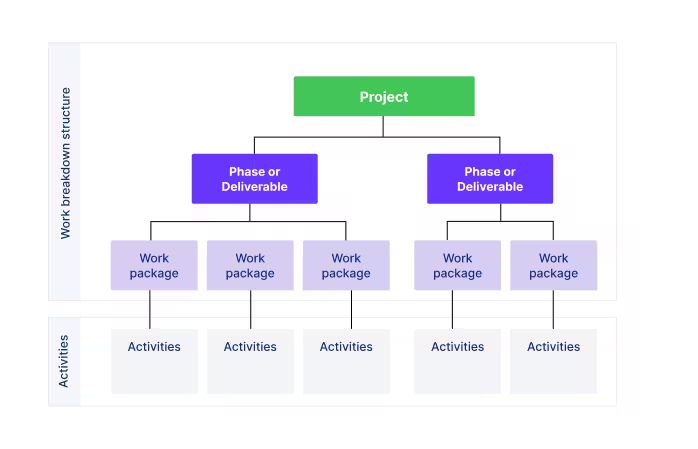
    Work Breakdown Structure

    A project scope outlines the development process for your application. It includes project timelines, deliverables, milestones, and reports.

    Break down the process into smaller tasks to create a structured outline. Often known as the Work Breakdown Structure (WBS), this outline offers a visual deconstruction of your project.

    It includes a list of activities, dependencies, priorities, and duration. Now, it’s time to place the data into a template and estimate the cost.

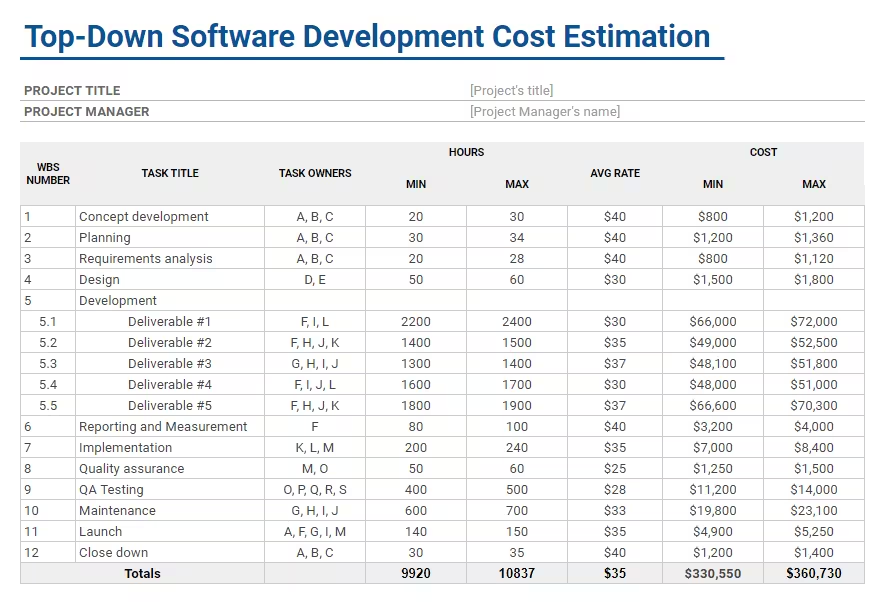
    Top-Down Software Development Cost Estimation Template.

    Top-Down Software Development Cost Estimation

    Source 

    The top-down template encapsulates all the phases, features, and deliverables according to your project requirements.Leverage the historical data from time tracking logs and make estimations for each resource.

    Add specific roles for your SDLC at each stage to the list and calculate their average hourly rates.

    Multiply this with the estimated number of hours to get a rough estimate. You need to understand that these estimations are based on generalized assumptions. So, it does not reflect the exact timelines and expenses your project may incur.If you already have enough historical data from past software projects, these rough estimations can be refined for your pitch against stakeholders.

    Button-Up Software Development

    This template allows you to estimate costs more accurately than the top-down approach. Create a project schedule by breaking the phases into tasks.Specify dependencies for each task and ensure tasks are assigned to a single person. Ensure that, on average, one team member does not spend more than 60-80 hours on one task.Further, review the historical information on previous projects. Predict the time range for each task, considering the best case, the worst case, and a realistic scenario.

    Best, Worst, and Realistic(BWR) Template

    Go through the project schedule and reassess the data. Make sure there are no assignment overlaps and that all the risks are accounted for while making the schedule. Next, add the hourly rates for each role you defined and calculate the cost estimations.

    Ensure you consider everything from the best scenario, like project completion within time, to the worst-case scenario, extended delays. These are the three templates that you can use. However, there is no limit to the type of templates you can use for your app development cost estimations.

    However, observing each template closely, you will find some similarities. For example, each template has specific roles and defined tasks.This means breaking the entire process into smaller chunks of tasks. Let’s understand more about this breakdown.

    App Development Costs: A Breakdown

    Mobile app development costs can be complex to estimate, especially without a structured plan that is fulfilled with a template.But the real estimation process begins now. To simplify the process, you can break down the entire process into three significant steps.

    Initial Development Costs

    Initial development costs for creating an application can vary depending on its complexity.You also have to include features, the platform on which you want to deploy, and hiring expenses. Most significantly, the initial costs account for planning, wireframing, and prototyping activities.

    This means you must first consider the cost of market surveys and research behind feature ideation.

    It would also help if you considered the cost of creating prototypes and a wireframe for the entire development process.

    Ongoing Maintenance And Updates

    Another critical aspect of the breakdown is the cost of maintenance and updates.

    The application development process is not limited to the launch of the product. It is a continuous process where you have to work on each update and maintain performance.

    This process of constantly monitoring and maintaining performance requires higher costs.You have to have higher resources to monitor the app’s performance. Plus, you also have to conduct debugging, which will need more resources, leading to higher costs.

    Additional Costs That Aren’t Always Considered

    There are implicit costs that a company can incur without direct transactions, which are often ignored.

    For example, you invest in a tech stack to develop an application, but the same tech needs to be updated after a few years.

    So, upgrade and migration costs may not be considered initially while planning. Similarly, many practical costs may not be considered initially but eventually need to be paid.

    Once you have a comprehensive cost breakdown, you will have a basic idea of the total expense.Yet, many factors need to be considered before finalizing the budget for your app development project.

    Factors That Influence App Development Costs

    Mobile app development costs are many, and to get an accurate estimation, you need to understand the impact of different factors.

    These factors include app complexity, development methods, and deployment platforms.

    App Development Method

    If you are developing an application for your business, there are two major approaches-

    • Either you develop an application from scratch in a conventional approach
    • You can also use a drag-and-drop platform to develop an app.

    You can leverage different software development models, such as agile, waterfall, and others, for a traditional approach.

    On the contrary, no-code or low-code platforms help you avoid the hassles of hiring development teams and creating an app from scratch.

    Conventional Mobile App Development Approach

    This app development method follows a linear process from concept inception to app deployment.The conventional approach begins with requirements gathering, identifying the features, and designing prototypes and wireframes.

    Based on the wireframes, developers build code and integrate backend systems. A team of testers, QA, and developers conducts in-depth testing to ensure app functionality.

    After comprehensive testing, the app is deployed on a pre-defined platform.Post-deployment monitoring and maintenance work from the team ensures consistent system performance. Major costing factors for the conventional development approach include,

    • Labor costs due to coding complexity
    • Longer time-to-market
    • Custom feature development costs
    • Scalability costs

    No Code Platforms

    These platforms offer tools and features that enable developers with more technical knowledge to develop applications.

    Unlike the conventional approach, no-code platforms reduce businesses’ initial setup costs. Plus, you don’t need an extensive team to develop the app. It provides drag-and-drop features for small business owners to build apps quickly. These platforms help small businesses with smaller budgets to build applications.However, if you need extensive customizations with the no-code applications, you may have to pay for add-ons.

    Low-Code Platforms

    While the conventional approach helps you develop apps from scratch with coding, no-code platforms offer drag-and-drop features.Low-code platforms bring together both traditional and no-code approaches. Yes, you have the visual development capabilities for businesses fused with the coding capabilities.This supports faster development cycles, ensuring lower time to market and cost efficiency.

    However, like no-code platforms, customization is a significant challenge for low-code development.

    Pro Tip: Comparing all three development methods, you will discover that no-code and low-code approaches are cost-effective.

    However, considering the cost of customizations, the conventional approach makes more sense. Software Integration

    Custom App Cost by Its Complexity

    Average app development costs for a simple application can range between $4500 and $65000.On the other hand, an app with medium-level complexity can cost anywhere between $55000 and $130000 and beyond.The point here is to change costs based on the level of app complexity. For example, if your app is complex, the price can increase to $350,000.Some of the significant app complexity factors to consider are,

    Complexity and Scope of the App

    Complexity and the number of features you want to include directly influence the development cost.Your application may require multiple user roles with different permissions, registering forms and databases with real-time data processing.Such a wide range of features and their development complexity can affect the total cost.

    Industry-Specific Requirements

    Different industries have specific needs that impact the cost of app development.

    For example, if you are building a healthcare app, you must ensure compliance with protocols like HIPAA or GDPR.

    Similarly, you need to consider the cost of developing systems according to domain-specific needs. This can include the cost of procuring machines, designing processes, and more.

    Licensing and Third-Party Integrations

    Licensing fees and integration with third-party services also account for a significant part of the app’s cost.Many regions have specific licensing fees for businesses in specific industries. You also need to consider the cost of integrating third-party services like AI, ML, and others. The cost of integrating such advanced technologies into your app will require resources and expertise, costing you more.

    Backend Infrastructure

    The backend infrastructure is the backbone of app functionality and reliability.For instance, if you are creating an application like Instagram, you will need reliable and robust infrastructure.Handling millions of interactions on a daily basis will require not just storage capacity but high-end data processing.

    The cost of high-end computing power and storage with cloud services can be higher. So, you need to ensure you add these costs while planning the app development budget.

    Security and Data Protection

    Security and data protection costs add to your existing app development cost.It includes the cost of creating secure infrastructure, authentication mechanisms, encryptions, and more. You may have to form a security team requiring extensive hiring, leading to extra costs.

    Platform-Based App Development Costs

    What platform you choose to deploy your application can determine the cost.

    For example if you are developing a native app for iOS, it’s cost will be different from Android application.

    iOS Development Costs

    Developing apps specifically for iOS requires solutions compatible with Apple’s ecosystem. This includes iPhones, iMacs, iPads, tvOS, and more apps.

    Apple has stringent quality guidelines for its platform, so developing an app for the iOS platform can be more expensive due to high quality and security requirements.

    The average cost for iOS app development ranges between $55,000 and $300,000, depending on the app’s complexity and requirements.

    Android App Cost

    Android app development must cater to a broader range of devices with varying screen sizes, resolutions, and hardware.

    Again, Google has its own set of guidelines for developers to follow if they want to publish an application on the Play Store.

    So, you need to invest in quality Android development, ensuring compliance with Google’s requirements. This fragmentation requires extensive testing and optimization, which can increase development costs.On average, building an Android app can cost between $50,000 and $300,000.

    Cross-Platform

    Cross-platform development involves creating apps that run on both iOS and Android using frameworks like React Native or Flutter.

    While this approach can reduce development time and costs, it may compromise performance and functionality.

    The cost for cross-platform apps generally falls between $40,000 and $150,000, offering savings compared to developing separate native apps for each platform.

    Mobile Devices Supported

    Ensuring compatibility of your application across devices can be costly. Take the latest flip smartphones from Samsung.

    These phones have two screens, and when users switch from the outer screen to the inside screen, the app experience needs to be consistent.

    Developing such capabilities can cost you higher because you need to have specialized team work on the responsive design.

    Similarly there are many other features that you need to work on ensuring a uniform experience across the devices supported.

    Are you planning app development?

    Contact us today for expert guidance and support to bring your project to life. Our dedicated team is here to assist you every step of the way!

    Type of Teams You Hire!

    If you are looking to develop an application for your business there are different types of team you have to spend on.

    For example you can either choose an in-house development team or outsource the entire development.

    If you hire an in-house team there will be cost related to recruitments, perks, bonuses, insurance and more.

    Here is a comparison between in-house and outsourcing your mobile app development

    Factors In-house Development Outsourced Development
    Cost Higher upfront costs due to recruitment, salaries, and employee training. Lower upfront costs with no need for long-term hiring or infrastructure investment.
    Expertise May require significant time and effort to build an experienced in-house team. Provides immediate access to experienced developers with specialized technical skills.
    Time to Market Longer development timeline due to hiring, onboarding, and team setup. Faster time to market as the outsourced team can begin development immediately.
    Scalability Scaling the team up or down can be slow and resource-intensive. Easier to scale resources based on changing project requirements.
    Overhead Requires managing the entire development lifecycle, infrastructure, and operations internally. The outsourcing provider manages project coordination, infrastructure, and operational overhead.
    Control Offers greater control over the development process, priorities, and team management. Provides less direct control, though the outsourcing partner is accountable for agreed deliverables.
    Risks Includes hiring, training, retention, and resource availability risks. Reduces operational risks as the outsourcing provider assumes responsibility for project delivery.
    Flexibility Less flexible when adapting to changing business requirements or project priorities. Offers greater flexibility to adjust team size, timelines, and project scope as needed.

    Development Team Size and Location

    Mobile app development costs can heavily depend on what team size and type of talent you need for your project.Each member of the team, whether a developer, designer, project manager, QA, or solution architect, contributes to the total cost. Here is a rough estimate of the team members’ cost contribution.

    Cost Factors and Requirements Simple App Medium App Complex App
    Development Time 3–7 Months 7–10 Months 8–12 Months
    Developers $35,000+ $65,000+ $150,000+
    UI/UX Designer $5,500+ $7,500+ $17,000+
    Project Manager $7,700+ $17,500+ $15,000+
    QA Specialist $11,000+ $28,000+ $27,000+
    Business Analyst $3,700+ $8,200+ $18,000+
    DevOps Engineer $4,700+ $7,100+ $12,000+
    Solution Architect $3,500+ $7,560+ $8,000+
    Total $56,000+ $115,000+ $150,000+

    Ultimately, how big a team you need will determine the app development cost. A bigger team means higher costs.Another crucial aspect that you need to keep in mind is the cost variations due to the location of developers and designers. If you hire a team from a nearby location, chances are your control on the project outcome can be better, but it will cost more. Again, it depends on the location-specific rates of developers. Here are the rates for developers across locations.

    Location Per Hour Developer Fee
    India $15–$40/hr
    United States $70–$180/hr
    United Kingdom $45–$100/hr
    Ukraine $30–$100/hr
    Australia $80–$250/hr
    Russia $55–$150/hr

    Pricing Models

    App development costs can depend on service providers’ different pricing models.For example, an app development company can offer multiple pricing models based on engagement approaches like

    • Fixed Price Model- In this model the budget and scope of the project is fixed with an agreed timeline for delivery. Everything from development approach, total team members and other aspects of development is fixed.
    • Hourly/Monthly Pricing- You can hire developers and other team members individually on an hourly, monthly, or annual basis. The best part is the flexibility of hiring talent as and when required.
    • Dedicated Team-  You pay for an entire team without the hassle of recruiting each member and looking after their remunerations. The entire team management, project delivery and performance maintenance is on the app development company.

    These are some of the factors that you can consider to plan the app development budget.

    However if your estimation exceeds the pre-planned budget, you can follow specific best practices to optimize costs.

    How Can You Reduce Your Mobile App Development Costs?

    Creating a mobile appcan be a significant investment, but there are several strategies to help reduce your costs without sacrificing quality. Here are some key areas to focus on:

    Prioritize Features Early On

    Defining your app’s core features from the beginning is crucial. This means identifying which features are essential for your app’s functionality and which ones can be added later as updates.Focusing on the critical components first can avoid unnecessary expenses and streamline the development process.

    Often, an MVP approach can be very cost-effective, allowing you to launch a functional version of your app and gather user feedback before investing in additional features.

    Involve Quality Assurance Early On

    Quality Assurance (QA) should not be an afterthought. Involving QA during the initial stages of your project helps detect issues early, reducing the cost of fixing bugs later.

    Early testing and continuous QA processes ensure a more stable product and save time and money in the long run by preventing expensive post-launch patches and updates.

    Plan for the Future

    When planning your app, think about future needs and scalability.Ensuring that your app’s architecture can accommodate new features and increased user loads will save you from costly redesigns or redevelopment.

    Opting for scalable solutions initially makes future expansions smoother and more cost-efficient.

    Cross-Platform (or Hybrid or Multi-Platform)

    Developing cross-platform appscan be more economical than creating separate versions for iOS and Android.

    Technologies like React Native or Native allow you to build apps that work on multiple platforms from a single codebase, reducing development time and costs.

    Mobile Devices Supported

    Consider the range of devices your app will support. While targeting the latest models is tempting, supporting a wider range of devices can broaden your user base.However, it also means more extensive testing and potential compatibility issues, so strike a balance that makes the most sense for your app’s audience.

    Conclusion

    Estimating the app development costs can be a challenging task if you don’t have a structured approach.Leveraging a template, you can create a well-defined costing structure, allowing you to estimate the development cost accurately.However, you need to take into account different factors like app complexity, team size, location of developers, and many more. While considering these factors help you estimate the cost, optimizing it requires implementation of best practices.

    This is where an experienced app development company like Zennaxx can help. Get an estimate of your app development project now without any hassle.

    Read Also: 

  • The Top Emerging Technologies in Education You Need to Know

    The Top Emerging Technologies in Education You Need to Know

    The integration of emerging technologies in education is transforming the way we teach and learn.As digital tools and platforms continue to evolve, they offer innovative solutions to traditional educational challenges, making learning more engaging, accessible, and effective.This transformation is not only reshaping classroom experiences but also preparing students for a tech-driven future.In this blog post, you will discover:

    • How key technologies like AI, AR, and IoT are transforming education
    • The benefits and challenges of integrating these technologies into educational systems
    • Challenges of implementing new technology in schools

    Let’s explore how these emerging technologies are shaping the future of education.

    Statistics

    • A 2023 UNESCO report found that 84% of education systems have strategies for training teachers on how to effectively use technology in the classroom, up from 72% for pre-service teacher education-UNESCO Technology in Education
    • A 2021 study revealed that a whopping 92% of teachers believe technology will significantly influence education within the next five years – WiFiTalents Technology In Education Statistics
    • The global EdTech market is flourishing, with a projected Compound Annual Growth Rate (CAGR) of 18.1% reaching a potential value of $404 billion by 2025 – Grandview Research
    • Fueled by the pandemic’s impact on education, U.S. education technology companies secured over $803 million in venture capital funding during the first half of 2020 alone- ImpactMyBiz
    • A 2023 survey found a significant correlation between technology and student engagement, with 76% of students reporting that technology makes learning more engaging – University of Connecticut citing EdWeek data.

    The Role of Emerging Technologies in Education

    Technology has always played a critical role in educational advancement, but in recent years, the pace of technological innovation has accelerated dramatically.This rapid development is reshaping education in ways previously unimaginable.

    This approach allows for deeper exploration of subjects during classroom time, fostering critical thinking and collaboration among students.For example, modern technology supports the flipped classroom model, where students watch lectures at home and engage in hands-on activities in class.

    Emerging technologies are transforming traditional teaching methods and making learning more dynamic and interactive.These technologies enable personalized learning experiences, provide real-time data analytics, and create immersive environments that enhance student engagement and motivation.

    Transformation of Traditional Teaching Methods

    Traditional teaching methods often rely on one-size-fits-all approaches, which can be limiting for students with different learning styles and abilities.Emerging technologies offer solutions that cater to individual learning needs, making education more inclusive and effective.

    With tools such as interactive whiteboards, digital textbooks, and online resources being used in many classrooms today, these technologies facilitate a more engaging and interactive learning environment that caters to diverse learning styles.

    Personalized Learning Experiences

    One of the most significant impacts of emerging technology on education is its capacity to provide personalized learning experiences.

    Now educators or education service providers can use adaptive learning platforms that leverage data analytics to assess each student’s strengths and weaknesses and tailor content to each learner’s needs.

    This targeted approach ensures that students receive the right level of challenge and support to optimize their learning outcomes.

    Key Emerging Technologies In Education

    As technology continues to evolve, several key innovations are making a significant impact on the educational landscape.These emerging technologies are not only enhancing the learning experience but also transforming how educational institutions operate and deliver content.

    Let’s explore some of the most influential technologies in education today.

    Augmented Reality (AR) and Virtual Reality (VR)

    AR and VR technologies create immersive learning environments that make education more engaging and interactive.These technologies bring abstract concepts to life, allowing students to visualize and explore subjects in new ways.AR overlays digital information onto the physical world, enhancing the learning experience with interactive elements.VR, on the other hand, creates fully immersive environments, allowing students to explore new worlds and scenarios.

    In science education, for instance, AR can enable students to interact with 3D models of molecules, cells, and organs.

    This hands-on approach enhances understanding and retention of complex scientific concepts. Similarly, a history class can make learning more engaging and memorable by using VR to simulate real-world scenarios, such as historical events, ancient civilizations, or geographical locations. Project Definition and Scope

    Data Analytics or Learning Analytics in Academics and Sports

    Data analytics or learning analytics, is changing the way educational institutions assess and improve student performance.By analyzing large datasets, educators can gain insights into student behavior, engagement, and learning outcomes.

    This enables them to make informed decisions and tailor instruction to individual needs.In academics, learning analytics can identify at-risk students and provide early interventions to support their success.

    For example, predictive analytics can flag students who are struggling with specific subjects, allowing teachers to provide targeted support and resources.In sports, learning analytics can be used to track athletes’ performance, identify areas for improvement, and develop personalized training programs.

    This data-driven approach helps athletes reach their full potential and enhances overall team performance.

    Artificial Intelligence and Machine Learning

    Artificial intelligence (AI) and machine learning (ML) technologies enable the creation of intelligent tutoring systems that can identify learning patterns, analyze student performance, and adapt instructional strategies to better meet individual learning needs.

    AI-powered platforms can provide personalized feedback and support to help students master complex subjects at their own pace.These systems can adapt to each student’s learning style, providing customized resources and practice exercises to reinforce understanding.Imagine a student struggling with algebra. An AI-powered tutoring system can identify specific areas of difficulty, provide targeted practice problems, and offer explanations tailored to the student’s learning style.

    Additionally, AI can automate administrative tasks, such as grading and attendance tracking, freeing up teachers’ time to focus on instruction and student support.

    Internet of Things (IoT)

    The Internet of Things (IoT) connects devices and sensors to the internet, creating smart learning environments.

    IoT devices, such as smartboards, sensors, and wearable technology, can be used to monitor classroom conditions, track student attendance, and provide real-time feedback on student engagement.

    Also, IoT-enabled tools facilitate seamless communication and collaboration among students and educators to enhance the learning experience.

    Educational institutions can leverage IoT technology to create smart classrooms that are equipped with devices and sensors that can monitor environmental factors, such as temperature, lighting, and air quality, to create optimal learning conditions.

    And wearable devices can be used to track student activity levels to enhance performance.

    Have a Business Idea in Mind?

    Our solutions are designed to streamline transactions, ensuring a seamless and secure experience for both you and your customers. Let’s turn your idea into a thriving online venture together.

    Cloud Computing

    Cloud computingoffers scalable resources and storage solutions, making it easier for educational institutions to manage and deliver content while enabling educators and students to access educational materials from anywhere.

    Cloud-based platforms provide access to a wide range of educational resources, collaboration tools, and administrative systems that support remote and hybrid learning models.

    For example, cloud-based learning management systems (LMS) allow students to submit assignments, participate in discussions, and access course materials online.

    On the other hand, it allows teachers to seamlessly create and share educational content, track student progress, and facilitate assessments. This flexibility and scalability make cloud computing an essential component of modern education.

    Automation

    Automation streamlines administrative tasks and improves the efficiency of educational institutions.By automating repetitive processes, schools can reduce administrative burdens and allocate more resources to teaching and learning.

    For instance, educational institutions can deploy automated grading systems that use AI to assess student work, provide instant feedback, and reduce the workload for teachers.Schools can also use attendance tracking systems to automatically record student attendance using biometric data or smart ID cards.

    These automated solutions enhance productivity and allow educators to focus on delivering high-quality instruction.

    Usage of 5G Technologies in Education

    The advent of 5G technology is revolutionizing the way educational content is delivered and consumed.

    With faster internet speeds and lower latency, 5G enables seamless streaming of high-quality video content, real-time collaboration, and enhanced remote learning experiences.

    5G technology supports the use of AR and VR in education, providing smooth and immersive experiences without lag or buffering.

    It also enables real-time communication and interaction between students and educators, regardless of their location. This connectivity is particularly beneficial for remote and rural areas, where access to high-speed internet has traditionally been limited.

    App-Based Learning and Gamification

    App-based learning and gamification are making education more engaging and interactive for learners.

    Educational apps provide personalized learning experiences by allowing students to learn at their own pace and track their progress.

    Gamification incorporates game elements, such as points, badges, and leader boards, into the learning process to motivate students and encourage active participation

    Language learning apps like Duolingo use gamification to teach new languages.These app-based learning solutions makes the learning process enjoyable and rewarding by allowing students to; earn points for completing lessons, compete with friends, and receive instant feedback.

    ERP Solutions for Schools

    Enterprise Resource Planning (ERP)solutions help educational institutions manage their operations efficiently.

    ERP systems integrate various administrative functions, such as student information, finance, human resources, and facilities management, into a single platform to improve communication, optimize efficiency, and enhance decision-making.

    For example, a school can build an ERP system to manage student information, track academic progress, and handle financial operations, in order to reduce administrative workloads and minimize errors.

    The system will also provide real-time access to data, enabling educators and administrators to make informed decisions and improve school management. By centralizing and automating administrative tasks in one platform, ERP solutions enhance productivity and support the smooth operation of educational institutions.

    Blockchain Technology

    Blockchain technology offers a secure and transparent way to manage educational records. By using blockchain, educational institutions can create tamper-proof records of student achievements to ensure the authenticity of credentials and prevent fraud.

    For instance, blockchain-based platforms can issue digital diplomas and certificates that are easily shareable and verifiable. This technology also supports decentralized education platforms, where students can access courses and resources from multiple providers while maintaining a secure and unified record of their achievements.

    Digital Master Classes

    Digital master classes offer access to expert-led courses and high-quality online education.These classes are typically taught by industry professionals and subject matter experts, providing students with valuable insights and practical knowledge.

    Digital master classes provide students with the opportunity to learn from the best in their fields, regardless of geographical constraints.

    Platforms like MasterClass and Coursera offer a wide range of digital master classes in subjects such as cooking, writing, photography, and business.These courses often include video lessons, interactive assignments, and peer-to-peer feedback, creating an engaging and immersive learning experience.  Learn how to make an app like Uber: process, costs, and tips. Start your ride-hailing app development journey now!

    Payment Gateway

    Payment gateway solutions simplify the process of fee collection and managing transactions in educational institutions.

    By integrating secure online payment systems, schools can streamline the process of collecting tuition fees and other payments. These solutions reduce administrative overhead and improve financial transparency.Parents and students can make payments conveniently using credit cards or other electronic methods, and the system can automatically generate receipts and update financial records.This not only simplifies the payment process but also ensures accuracy and transparency in financial transactions, benefiting both the institution and its stakeholders.

    Benefits of Emerging Technologies in Education

    Enhanced Student Engagement and Motivation

    Emerging technologies in education create more interactive and engaging learning experiences.By incorporating multimedia, gamification, and immersive environments, educators can capture students’ attention and motivate them to learn.

    Improved Accessibility and Inclusivity

    Technology makes education more accessible to students with diverse needs. Assistive technologies, such as screen readers and speech-to-text software, support students with disabilities.And online platforms provide flexible learning options for students who may not have access to traditional classrooms.

    Data-Driven Insights for Educators

    Data analytics tools provide educators with valuable insights into student performance and learning patterns.With these data-driven insights, teachers can identify areas where students need additional support and tailor their instruction accordingly.

    The Challenges of Implementing New Technologies in Schools

    While emerging technologies offer significant benefits, their implementation in educational settings is not without challenges.Schools must navigate various obstacles to effectively integrate these innovations into their teaching and administrative practices.

    Budget Constraints

    One of the primary challenges is the financial cost associated with adopting new technologies.Schools often operate with limited budgets, and investing in the latest technology can be expensive.

    This includes the cost of purchasing devices, software licenses, and infrastructure upgrades, as well as ongoing maintenance and support.

    Teacher Training and Professional Development

    Effective implementation of new technologies requires teachers to be adequately trained.Professional development programs are essential to equipping teachers with the skills and confidence needed to integrate technology into their classrooms effectively.

    Infrastructure and Technical Support

    Implementing new technologies often necessitates upgrading existing infrastructure, such as internet connectivity, electrical systems, and hardware.Additionally, schools need reliable technical support to address any issues that arise and ensure smooth operation of these technologies.

    Data Privacy and Security

    With the increased use of digital tools comes the responsibility to protect student data. Schools must implement robust data privacy policies and security measures to safeguard sensitive information.This includes ensuring compliance with regulations such as the Family Educational Rights and Privacy Act (FERPA) and the General Data Protection Regulation (GDPR).

    Conclusion

    Emerging technologies are reshaping the educational landscape, offering new opportunities for personalized learning, improved accessibility, and enhanced engagement.As these technologies continue to evolve, they will play an increasingly vital role in modern education.

    Ready to unlock the power of emerging technologies in your educational institution or edtech company? Contact Zennaxx today for your educational app development needs.

    Our team of experts specializes in building cutting-edge apps and IT solutions that create a more engaging, convenient, and inclusive learning environment.

    Read Also:

  • What’s the Role of Technology in the Legal Sector?

    What’s the Role of Technology in the Legal Sector?

    The legal business has massively changed over the last five decades. Technology in the legal sector transformed a local business into a global enterprise, with a predicted worth of USD 1,011 billion until 2021.What has driven this major change, and What are the key factors that have disturbed the legal sector?As the different components but not limited to ethnic influences cause such a great migration in the legal sector, the most important segment in recent years is legal technology.

    This paper presents the significance of technology for the legal profession.Before diving deep into the core of the industry and the part of technology in legal sector, first, we have to explain what this term refers to as legal services. In 2022, the global legal services market hit a size of USD 952.29 billion, and experts anticipate it will grow at a Compound Annual Growth Rate (CAGR) of 4.5% from 2023 to 2030.

    This growth is due to the ever-growing use of the newest technologies and macroeconomic factors. These include growing business competition, commoditization, changing economic growth trends, and Foreign Direct Investments (FDI).Legal Services help organizations simplify legal requirements.

    They do this with services like conflict and policy management, examination, and reporting of filings. This need comes from the growth in the global legal services market.

    Statistics

    • Market size and growth: The global legal tech market was valued at a whopping $28 billion in 2022, and is expected to reach $25 billion by 2025 [1, 2]. That’s significant growth in just a few years.
    • Dominant region: North America is currently the leader in legal tech, and is projected to maintain that position through 2030, with a market value reaching $19.4 billion by then [3]

    What is Legal Tech?

    Legal technology, often known as Legal tech, involves innovative technologies and software that change the character of legal services in our daily lives. In the broadest sense, Legal tech connotes a set of technologies that:

    Legal tech tools fully automate legal practitioners’ work, including document management, legal research, case management, billing, and so on. These technologies can quickly do what people take a long time for. They are meant to help by simplifying and adding error and legal complexity.This complexity requires experts to deal with more intricate and valuable matters.

    Legal tech empowers society to be more connected to the law and legal systems by using platforms, devices, and software tools that have become the norm.

    Automaticity is the less scary form of self-service you will get. It contains online legal advice, virtual legal consultations, and independent legal forms.Platforms that match clients with attorneys also offer serialized legal resources to those in need, which they can use for free without visiting the attorney in person.The pace of technological use will continue and, therefore, have a more significant effect on law as a profession, bringing only more developments and advantages to the two involved.

    Role of Technology in the Legal Sector

    Technology is transforming the legal field. This is a win for both sides. It makes things cheaper by cutting labour costs and boosting productivity.

    Technology in legal sector bridges the gap between firms and clients, enabling clients to track their charges and stay informed about the progress of their cases.

    When done right, a machine is faster and more efficient than a human. That’s why it is a great help to law firms, covering many different tasks.

    Automated Processes

    In the past, people performed several legal tasks by hand, a time-consuming process that demanded a lot of labour.On the other hand, attorneys used their time repeating tasks based on information, which meant they could not attend to other imperative responsibilities.

    Instead, legal applications such as word processors and eDiscovery do the work automatically.

    Automating these tasks saves time and cuts down on human mistakes. It lets lawyers focus on new, more important, and productive work.For example, think about writing contracts and reviewing documents. These tasks used to take a long time.

    But now, AI-powered tools do them quickly and accurately.

    Ease of Research

    Professionals in law have become accustomed to using the Internet for investigations, but the use of printed resources remains a major need.This, in turn, can become a very time-consuming and cumbersome process for the attorneys.

    Through these research systems, lawyers are aware of any law and rule updates, and they can also use sophisticated searching tools not supported by printed resources. Also, these databases have a variety of content, such as case law, statutes, and legal journals.

    Lawyers can use them to do thorough research from anywhere. Access is fast, and knowledge is improved in legal research, keeping lawyers up to date with the most recent legal points.

    Better Resource Management

    Junior lawyers often had very small tasks, like scheduling, document handling, and moving the titles, which was a time-wasting and demotivating affair.Legal tech solutions, such as title management and calendars, do these jobs automatically.

    They free the younger attorneys from the work so they can do something more valuable. This transfer allowed senior lawyers to direct their resources most efficiently, leading to excellent and successful cases.The law firms can use their people more strategically.

    They will need to use more brain power to automate basic admin tasks.

    Reduced Risk of Errors

    Reduced Risk of Errors
    Mistakes made by humans in their legal work can cause unwelcome results. Sometimes, even the cases could be one of the outcomes.The technology in law contributes to the decrease in errors resulting from the absence of the sensor for visual perception and misinterpretation.

    Technology in the legal sector provide digital information that is easy to digest as it is.And they do this by using advanced analytics that helps practicing lawyers see various facts and evidence from different perspectives.Therefore, these applications enable data access, cross-reference, discovering patterns, and textual corrections, thus improving the authenticity of legal documents. Automation has a positive side. It guarantees legal experts less risk and more accuracy.

    It also brings them brighter solutions for their clients.This is a win-win situation where the legal professionals, on the one hand, minimize their risks with the help of technology in legal sector and, on the other hand, document their work with high accuracy, which leads to better legal service provision to the customers.

    Increased Transparency

    Sometimes, attorneys may complicate issues so that they can charge more for their services, adversely affecting the clients and leading to distrust, whether in law or not.Legal practice management tools provide a single platform. This setup lets clients access lawyer profiles, chitchat, get advice and counsel, or discover basic knowledge about legal documents.

    The attorney and the client build the relationship that results from this. Clients can receive updates on their case status and billing information and communicate directly with their attorneys through a secure online portal.This is the highest satisfaction a law firm can get from its clients.

    They are happy, well-informed, and part of the legal process.

    Introduction of New Legal Products/Services

    As technology in legal sector brings forth new legal service rules, the question of how to promote friendship among the clients gets consolidated.For example, the market is rising due to online law services and virtual law firms. They let clients get legal advice and prepare documents easily on the web.Such platforms bring a wide spectrum of customers to their stores, including individuals and small firms that need more money to work with traditional legal companies.Through the application of technology in law firms can innovate their products and services and thus gain a wide customer base.

    Higher Convenience

    We must realize that legal-based apps and software make the legal process much simpler and more comfortable for all parties involved.The home provides a convenient base for clients to reach required lawyers. The lawyers can update them on progress or find the information they need faster.Through the mobile device, they can schedule appointments, obtain the required legal advice, and review the documents of the case they are interested in.

    On the other hand, lawyers have the tools to work from home, communicate with their peers, and access case files and other documents on the go.As a result, this ease of practicing law enhances the legal experience and makes service delivery quick and efficient.

    Enhanced Customer Experience

    Ensuring client satisfaction is a crucial element in the whole process, in addition to providing qualitative legal services.

    AI can make a big difference by improving the customer experienceand adding a personal touch.

    AI algorithms will assess real-time data better to understand client preferences and present suitable legal solutions. This flexible routine helps them to prevent or limit downtime while clients are willing to be patient, amazed, and functional.Using AI technologies, law firms can enhance customer experience strategy and develop customer loyalty and retention through stronger client relationships.

    More Collaboration Among Lawyers

    The link between legal tech and collaboration is complete due to using technologies like Slack, Google Docs, and Microsoft Teams.They can work on cases, draft petitions, and remotely discuss important case matters. Legal technology has become a large force in the rise of remote law firms, drawing in the attraction of lawyers and law firms to the world.

    Collaboration platforms operate in a way that enables the team to find the last document saved, edit and send it to their clients, and be in contact with someone.Legal professionals need to collaborate through technology in law. This includes sharing documents, version control, and communication.Legal teams need to work efficiently, even if they are in different offices.

    As a result, the increased collaboration improves the laws, and thus, law firms can handle more complex and large-scale cases.

    Faster Processing of Information

    People use technology in law to enhance the speed and efficiency of processing information. You tackle intricate calculations and resolve errors with ease.

    For example, AI-powered search engines have reduced the time needed to complete tasks like legal research from 8–9 hours five years ago to just one minute.

    Lawyers can now automate document analysis and contract review, addressing tasks of a high-level nature that were previously personnel issues.Shortening the process of informational activities allows law companies to handle a high turnover of cases, create client satisfaction, compete and be sustainable in a fast-moving legal environment.These advantages are evidence of how legal technology can change the industry.

    Law firms need to be proactive about the future. They must remain adaptive. Technology in law plays a significant role. Continuous advancements in AI are crucial.

    Automation is also important. Digital platforms are expected to revolutionize the legal industry.

    An Outlook of the Future of the Legal Tech Market

    The business and corporate services industry brought in more than USD 210 billion in 2022. Strategic partnerships are what are driving this sector’s growth.Companies are working to offer more services by sharing their knowledge and resources.2022 large law firms dominated the legal services market, generating around USD 490 billion. According to estimates, the legal services market was worth USD 750.96 billion in 2023.These firms excel due to their diverse expertise and extensive networks. Their specialized teams offer various legal services to meet different client needs.

    Big firms enjoy large networks in the legal community and various industries.

    These networks help with referrals, partnerships, and attracting many clients.This network lets them handle complex cases well. It also fosters collaborations that expand their reach and strengthen their reputation.For example, in September 2023, Donaldson & Burkinshaw worked with Meridian Lawyers. The goal was to improve their global insurance and business law services.

    Australia and Singapore can collaborate more easily through this partnership, which capitalizes on the strengths of both organizations.

    Both companies have shared knowledge and specialized skills. These produce innovative solutions. They ensure efficient management of tricky corporate and commercial issues.

    What Types Of Legal Software Systems Do Law Firms Use?

    Law firms need software that functions uniformly everywhere and at all hours. Lawyers can harness these ten tools to excel in remote work.

    Are you planning software development?

    Contact us today for expert guidance and support to bring your project to life. Our dedicated team is here to assist you every step of the way!

    Document Management

    Any legal practice needs to be able to manage documents well. The old ways of doing things can take a long time and must work better.

    Modern document management software allows for easy assembly, storage, and exchange of documents. Using templates is easier, and uploading files is faster, which saves time.

    Automated Client Intake

    It can take a lot of work to get complete information from clients when you have to do the intake process by hand.Customers provide details by completing digital client intake forms online. This makes the intake process smooth, saving lawyers time and bringing in new clients.

    Legal Accounting

    Law firms require precise financial managementto achieve success. Legal accounting software makes it easier to deliver, evaluate, and review financial reports, helping make good decisions.

    Automated entries and error-free reports clarify the firm’s financial situation distinctly.

    Task Management

    Legal professionals have difficulty keeping up with all their tasks and deadlines. Software for managing tasks, like MatterSuite, helps you keep track of your progress, organize your work, and set reminders.

    A clear view of tasks that are due, finished, and coming up increases productivity and efficiency.

    Practice Management

    MatterSuite makes all aspects of the legal process easier with its comprehensive practice management software.These tools can do many tasks, like document management and accounting. They also do legal discovery and secure messaging. They cut the need for manual work and make operations more efficient.

    Time and Expense Tracking

    Law firms must closely track their time and costs. Using old methods doesn’t only sometimes work.Time and expense tracking software shows businesses which hours are productive and which are not.This helps them better manage their resources and cut down on costs that aren’t necessary.

    Customer Relationship Management (CRM)

    A customer relationship management (CRM) system links different groups, like sales, marketing, and customer service, in one place.

    Offering real-time access to client data through this integration increases sales, improves lead conversion, and strengthens relationships with clients.

    Online Payment Mechanism

    Law firms can improve their brand image by giving clients various payment options. Clients make payments with simplicity using LawPay and PayPal tools.Lawyers benefit from streamlining payment records because it reduces paperwork and ensures that bills are paid on time.

    Productivity Evaluation

    While monitoring employees’ work is necessary, it can be hard without the right tools.Technology like spreadsheets and collaboration platforms makes it easier to evaluate performance and see how everyone is doing at work, which leads to better collaboration and faster task completion.

    Legal Billing Software

    Legal professionals require precise billing to charge their clients correctly. it makes billing easier and keeps accurate records of billable and non-billable hours for lawyers.Clients will get accurate billing reports, increasing their trust and satisfaction.Setting up these top legal software programs can make a law firm much more productive, efficient, and client-satisfied, which will lead to growth and success in the long run.
    build mvp

    How Has Technology Changed The Legal sector?

    Technology revolutionizes the legal field by simplifying procedures, amplifying output, and enhancing client interaction.Legal professionals streamline their workflow by automating document review and research tasks.

    Remote Meetings

    Technology has redefined the way professional lawyers do their practice. Nowadays, attorneys can hold clients’ consultations, team meetings, and court appearances virtually through applications like Zoom and Microsoft Teams.Consequently, it is now much easier for all units to quickly keep in touch all over the globe without wasting much money travelling.

    Online Payments

    People no longer come to the office to pay their legal fees. Using online payment systems like PayPal, Stripe, and other digital banking tools has made it very easy to make transactions.

    Online payment options streamline contract completion between clients with secure transactions.

    Client Intake

    The utilization of technology in law has been instrumental in streamlining the client intake process.Digital forms and online questionnaires have made it possible for clients to provide the needed information before their first meeting.This approach helps lawyers be more productive and accelerate the initial consultation process by cutting out the fluff with the client.

    Virtual Offices

    The high reliance of many law firms on virtual offices has reduced the cost of physical office space.

    Cloud-based software enables attorneys to manage their workload, communicate with clients, and access case files from anywhere.

    Increasing the possibility of offering legal services and reducing the cost of operational expenses for law firms have enhanced the resilience of legal services.Technology in law has helped lawyers make their work easier and legal services more client-friendly. Lawyers’ character has transformed, establishing a strong presence in modern times.When high tech appears in legal institutions, it shows the impact that tech is having as a transformation, which has taken place in many professions. The legal field has seen tremendous innovation.

    Challenges Hindering The Path to Legal Disruption (& How to Mitigate Them?)

    Lack of Understanding

    The inadequate use and choice of technologies pose a significant challenge. Some are starting to see the benefits of technology in legal sector.They are realizing how technology could help make services better. Others believe that using technology in law might create unnecessary job loss.The survey revealed that 36% of lawyers need knowledge about the tools and technologies used in law firms to enhance their services.

    Organizational Issues

    Using technology in legal sector reshapes the legal industry’s business model, altering client acquisition, efficiency, and operations.This change means there are organizational issues to deal with. For example, the problems include acquiring new technologies and software for daily tasks.Also, they involve understanding the scope of various legal technologies. Lastly, they operate under a business model that is still in development. Most companies want to avoid entering the Emerging Tech in Law space.They seek other places to innovate but still want to keep their market position and help their business grow.

    Financial Barriers

    The cost of the production of legal technology, e.g., legal software development, is a large disadvantage.Lawyers are not happy with the money investment part of the development stage. Frankly, about 83% of respondents said they had technology experience in the legal industry because of financing matters.

    FAQs

    Q1.How is technology changing the legal profession?

    Technology tackles creative tasks, freeing people to explore tech sector jobs. The legal field is changing because of technology’s automation of routine tasks and the popularity of research, which has made it easier for lawyers.

    Q2.Why is legal technology important?

    The biggest challenge for many companies is the transformation and shift to automation, digital platforms, and other technologies because of the sterilization of processes and complete risk management.Saves work and time.

    • Lowers operating costs.
    • Automated discovery process,
    • Improves service quality.
    • Fosters new legal services.
    • Provides extensive legal resources.
    • Enables virtual law firms and smart contracts.
    • Avoids making mistakes.
    • Through smart contracts, they will process and pay out claims and distribute coins based on predetermined rules.

    Q3.What technology do law firms use?

    Legal firms use many technologies these days and do many different things. The most common technologies involve costs, usage, deployment, and service provisioning.

    The list of recent uses law firms use is

    • Inhouse documentation software,
    • Cloud-based technology,
    • Artificial intelligence,
    • Internet of Things (IoT),
    • Word processors and eDiscovery solutions,
    • Time tracking and billing technology solutions,
    • Blockchain-based smart contracts and payment solutions,

    Ending Note

    The use of technology in law within the legal sector and the government can make a big difference in their productivity and in bringing in a larger client base.This technology allows the delivery of adaptable legal service systems, gives transparency, and reduces the chances of documentation errors.

    Should you plan to build an app for your legal service app, you should first contact an experienced mobile app development company in Canada.

    They will lead you the whole way and give you great mobile app services you can be proud of.Contact our team today to discuss your legal sector app development needs and get free consulting services and expert guidance on creating a successful legal service app.

    Read Also: 

  • 10 Major Problems in Healthcare that Can Be Solved With Healthcare Technology

    10 Major Problems in Healthcare that Can Be Solved With Healthcare Technology

    The healthcare industry is undergoing a significant transformation due to technological advancements.From telemedicine to AI-driven diagnostics, digital innovations are breaking down traditional barriers and paving the way for a healthier world.

    In this rapidly evolving landscape, it’s important to understand how technology can address critical problems in healthcare in order to create innovative solutions that enhance patient satisfaction and drive business growth.

    In this post, you’ll gain insights into 10 major problems that healthcare technology is solving for a better, healthier world, as well as the impact of technology on enhancing accessibility, efficiency, and patient outcomes in the healthcare industry. Let’s dive in.

    How Digital Healthcare is Transforming the Medical Industry

    Digital healthcare is fundamentally altering how medical services are delivered and consumed by providing innovative solutions to long-standing issues.From telemedicine to electronic health records (EHR), technology is enhancing the efficiency, accuracy, and accessibility of healthcare services.

    The integration of artificial intelligence (AI), machine learning, and data analytics is empowering healthcare providers with insights that improve diagnosis, treatment, and patient outcomes.Furthermore, wearable technology and mobile health applications are enabling continuous health monitoring and personalized care.

    Digital tools are empowering patients with more control over their health while allowing healthcare providers to deliver more accurate and timely care.

    How to Solve Healthcare Problems with Technology?

    Using technology to address problems in healthcare requires a strategic approach.

    This process involves identifying the specific challenges faced by the healthcare industry, understanding the potential technological solutions, and implementing these solutions in a way that improves healthcare delivery and patient outcomes.

    Let’s consider the major problems in healthcare and how technology can solve them.

    Problem 1: Lack of Remote Access to Healthcare Services

    Remote access to healthcare is crucial, especially in rural or underserved areas where medical facilities are scarce.The lack of remote access leads to delayed treatment, increased healthcare costs, and poor health outcomes for patients who cannot easily visit healthcare providers.

    Solution : Invest in Building Healthcare Mobile and Web Applications

    Healthcare mobile and web applications can bridge the gap between underserved areas and quality healthcare services by providing telemedicine services, remote monitoring, and virtual consultations.

    These apps enable patients to connect with healthcare professionals from the comfort of their homes, thereby reducing the need for physical visits.

    Healthcare appsalso offer features such as appointment scheduling, medication reminders, and access to medical records to enhance patient engagement and adherence to treatment plans.

    Problem 2: Healthcare Professionals Operate in Siloes

    Healthcare professionals often operate in silos, with limited communication and collaboration between different specialties and departments.This fragmentation can lead to duplicate efforts, miscommunication, and poor patient care.

    Solution : Create Social Networking Apps for Healthcare Professionals

    A social networking app specifically designed for healthcare professionals can foster collaboration and knowledge sharing.

    With these types of apps, doctors, nurses, and other healthcare workers can share insights, discuss complex cases, and access a broader network of expertise.

    It can also provide a platform for sharing best practices and staying updated with the latest research and developments.

    By breaking down silos, healthcare providers can improve patient outcomes through better-coordinated and informed care.

    Problem 3: Challenges with Medicare and Medicaid Reimbursement

    Medicare and Medicaid reimbursement processes are often plagued by inefficiencies and errors that lead to delayed payments, increased administrative burdens, and financial strain on healthcare providers.These issues can result in reduced patient care quality and limited access to services.

    Solution : Build a Medicare and Medicaid EHR System

    Electronic Health Record (EHR) systems tailored for Medicare and Medicaid can streamline the reimbursement process.These systems ensure that patient data is accurately recorded, making it easier to generate and submit claims.Moreover, they can provide real-time access to patient records, improving care coordination and reducing administrative burdens on healthcare providers.

    EHR systems can automate billing, reduce paperwork, and ensure accurate and timely reimbursements.

    Different Types-of-Medical Apps inner image

    Problem 4: Poor Supply Management System

    Efficient supply management is critical for healthcare facilities to ensure that they have the necessary medical supplies and equipment.

    Without a robust supply management system, hospitals and clinics may face shortages, overstocking, and wastage.

    Solution : Build Data Management Systems

    Data management systems optimize supply chain operations by providing real-time tracking and inventory management.

    These systems help healthcare providers predict future needs, track supply usage, and ensure timely delivery of supplies.Data management systems can be integrated with EHRs to provide a comprehensive view of supply and demand, ensuring that healthcare facilities are always stocked with necessary supplies. By leveraging data analytics, healthcare facilities can reduce costs, minimize waste, and ensure that essential supplies are always available.

    Problem 5: Handling Large Volumes of Patient-Related Data

    Healthcare providers generate and handle vast amounts of patient data, including medical histories, lab results, and treatment plans.Managing this data efficiently is challenging, and any mismanagement can lead to errors and compromised patient care.

    Solution : Build Solutions With Cloud and  Data Analytics Capabilities

    Managing large volumes of patient-related data effectively requires building healthcare apps with robust cloud storage and data analytics capabilities.

    Combining both features allows for better data organization, accessibility, and security, which contributes to enhanced patient care and operational efficiency.

    Cloud-based solutions provide scalable storage solutions. They can store vast amounts of data securely and make it accessible from anywhere.

    Data analytics capabilities enable healthcare providers to then process this data to extract valuable insights, such as identifying disease patterns, predicting outbreaks, and personalizing treatment plans.

    Ready to Transform Your Healthcare Experience with Innovative Software?

    Have questions or ready to take the next step? Reach out to us today and let’s innovate together.

    Problem 6: Inefficient Data Sharing

    Efficient data sharing between healthcare providers is essential for coordinated care.However, many healthcare systems still rely on outdated data sharing methods, leading to inefficiencies and errors in data exchange.

    Solution : Utilize Blockchain-Based Database

    Blockchain technology offers healthcare providers a secure and transparent way to manage and share data.A blockchain-based database ensures data integrity, accuracy, and security, making it tamper-proof and accessible only to authorized users. With blockchain technology, patient data can be shared seamlessly across different healthcare providers to enhance quality healthcare service delivery.

    Problem 7: Lack of Online Pharmaceutical Stores

    Access to medications can be a significant barrier for many patients, especially those living in remote areas.Lack of online pharmaceutical stores limits patients’ ability to obtain necessary medications conveniently.

    Solution : Launch Prescription-Based Online Medical Stores

    Setting up prescription-based online medical stores can address this issue by providing a convenient platform for patients to order medications.Leveraging digital platforms, these online pharmacies can enhance patient adherence to treatment plans and improve health outcomes.

    Online pharmaceutical stores offer features such as home delivery services, prescription management, and automated refills, ensuring that patients have timely access to their medications.

    Problem 8: Lack of Early Warning Healthcare Devices

    Early detection of health issues is crucial for effective treatment and prevention.However, many patients lack access to devices that can monitor their health and provide early warnings of potential problems.

    Solution : Introduce the Internet of Medical Things (IoMT)

    The Internet of Medical Things (IoMT) can revolutionize early detection and continuous health monitoring.IoMT includes wearable devices, smart sensors, and connected medical equipment that collect and transmit health data in real-time. These devices can monitor vital signs, detect anomalies, and send alerts to healthcare providers to enable early intervention and proactive care.By providing continuous health insights, IoMT can help prevent serious health issues and enhance the quality of life for patients.

    Problem 9: Lack of mHealth Applications

    Mobile health (mHealth) applications empower patients with information and tools to manage their health.Without these tools, patients face barriers to accessing convenient and timely healthcare, particularly in rural or underserved areas.This gap hinders proactive health management, limits patient engagement, and increases the burden on healthcare facilities.

    Solution : Launch mHealth Applications for Patients

    mHealth application development enables healthcare providers to enhance patient engagement, promote healthy lifestyles, and provide personalized health advice.

    With features like fitness tracking, dietary advice, mental health support, and chronic disease management tools, mHealth apps provide patients with valuable resources at their fingertips.

    These apps can also be integrated with wearable devices to provide a holistic view of the user’s health.

    Problem 10: Slow Pace of Modern Solutions

    The healthcare industry can be slow to adopt new technologies, often due to regulatory challenges, high costs, and resistance to change.This slow pace hinders the implementation of innovative solutions that could significantly improve patient care and operational efficiency.

    Solution : Genome Editing Technology (GET)

    Investing in and adopting genome editing technology can accelerate the development of personalized medicine and innovative treatments.Genome editing technology, such as Clustered Regularly Interspaced Short Palindromic Repeats (CRISPR), offers groundbreaking possibilities for treating genetic disorders and advancing personalized medicine. With this gene editing technology, scientists can correct genetic mutations, enhance disease resistance, and tailor treatments to individual patients.

    What is the Future of Technology in Healthcare?

    The future of healthcare technology is promising, with ongoing advancements poised to further transform the industry.Telemedicine and remote monitoring will become more prevalent, making healthcare accessible to all.The integration of blockchain and IoMT will enhance data security and connectivity, leading to more efficient and effective healthcare delivery.

    Also, emerging technologies like artificial intelligence (AI), machine learning, virtual reality (VR), and 3D printing are set to revolutionize diagnostics, treatment, and patient care. AI and machine learning can enhance diagnostic accuracy, predict disease outbreaks, and optimize treatment plans.

    VR can provide immersive training for healthcare professionals and therapeutic experiences for patients.3D printing can enable the creation of customized medical devices and even organs, reducing the wait time for transplants.As these technologies continue to evolve, they will address more problems in healthcare, improve patient outcomes, and enhance the accessibility of life-saving care services.

    The integration of these innovations will create a more connected, patient-centric healthcare system, ultimately leading to a healthier world.

    Healthcare Business Ideas

    Now let’s consider some healthcare business ideas that leverage technology to address critical problems in healthcare, improve efficiency, and enhance the quality of patient care:

    Telehealth Platform

    Create a comprehensive telehealth platform offering virtual consultations, remote monitoring, and follow-up care.This can bridge the gap between patients and healthcare providers, especially in rural or underserved areas, improving access to medical services.

    Mobile Health (mHealth) Apps

    Develop mHealth applications focusing on chronic disease management, fitness tracking, and mental health support.These apps can empower users to take control of their health, provide personalized health insights, and improve patient engagement and adherence to treatment plans.

    Online Pharmacy

    Set up an online pharmacy that offers prescription medications, over-the-counter drugs, and healthcare products.Incorporate features like online prescriptions, home delivery, and automated refill reminders to enhance convenience and ensure medication adherence.

    AI-Driven Diagnostic Tools

    Create AI-powered diagnostic tools that assist healthcare professionals in analyzing medical images, predicting disease outcomes, and personalizing treatment plans.These tools can enhance diagnostic accuracy, reduce time to diagnosis, and improve patient outcomes.

    Integrated Healthcare Platform

    Build a platform that combines telemedicine, electronic health records (EHR), mobile health (mHealth) applications, and online pharmaceutical services into a single, user-friendly interface. Such a platform would offer comprehensive solutions for patients, healthcare providers, and pharmacists, streamlining processes and improving the overall healthcare experience.

    Conclusion

    As healthcare technology continues to evolve, it will continue to play a critical role in the delivery of accessible, efficient, and top-quality healthcare services.

    So now is a good time to leverage this technology to build solutions that can solve many of the most pressing problems in healthcare in order to create a healthier world while generating revenue for your business.

    Ready to transform healthcare with cutting-edge technology? Reach out to us for quality health app development services.

    Partner with Zennaxx today to build innovative custom healthcare solutions that enhance patient care, streamline your operations, and drive better outcomes.

    Read Also:

  • How Much does it Cost to Build an Educational App?

    How Much does it Cost to Build an Educational App?

    An analysis by Cision found that the EdTech market could become a huge juggernaut, worth an estimated $289 billion by 2024. Some of the most effective digital learning resources are Google Classroom, Khan Academy, edX, and Duolingo, which is a live example of the market revenue of digital learning platforms. Statista also supports this statement by showing that global online learning platforms will make nearly twice as much money by 2027 ($64.50 billion).Educational app downloads on stores like Google Play and the Apple App Store have increased.Around the world, 1.14 billion people use tablets, most of whom are students. It has greatly affected education because this number has grown by 36% in the last six years.

    After the market has established the main points on how to develop an educational app? Which kind of design gives you the best output and market revenue? What is the common Cost for the education app development?

    The common Cost of building such an app ranges from $45,000 to $50,000, owing to factors such as UI/UX design, the number of features and the type it supports, app complexity, and the developers.

    Here, you are at an early stage of your startup or a school trying to launch an educational app.

    This blog post will focus on the key steps and things to remember. They are for developing an educational app that will be the best on the market and in high demand.

    All You Need To Know About the Current Educational App Market

    There is a positive trend in the educational app market right now due to the large number of extremely developed applications. We can see that the following figures illustrate the current situation:
    Current Educational App Market

    Source

    Market Growth

    Experts predicted that the global market for developing educational apps would reach $4.18 billion in 2024. These are some of the big changes happening in education. Most of them have to do with the growth and use of technology in many areas of education.

    Consumer spending in the U.S.

    Many students prefer teaching methods where their critical thinking skills form the basis of assessment competencies with the running internet trends.

    ABCmouse Mouse’s Success with Children

    The most downloaded app in the U.S. in 2023 was ABCmouse, a pay-per-child program that catered to children’s education. It reached 2 million downloads. Growing Smarter Kids and ABCmouse are supporters who stay clear about these issues and don’t waste time going into detail.
    develop an educational app

    Expanding Market Projections

    Along with a compound interest rate of 5.8% and a total market size of $470.11 billion, the e-learning market is expected to keep growing from 2023 to 2024. These facts show that this kind of technology is not only out there, but you can also trust it.

    E-Learning Benefits

    E-learning includes online materials like audiobooks, videos, and AR/VR. It has many benefits, including lower costs and more access to specialized courses. It’s widely accepted and used in many businesses because it works well and helps employees grow.

    Enhanced Productivity

    Consider the case of IBM, which discovered that e-learning can increase productivity by up to 50%. Employees can learn from video and audio materials anytime and anywhere, making the process more efficient in every way.

    The stats show the e-learning app market’s amazing growth and diversity. Consumer demand for easy, engaging, and fitting learning resources drives it. So, you have to do deep research on how to develop an educational app.

    Top Reasons to Build An Educational App

    You can understand the online education market from the above market statistics. Here is something more reflective of the growing demand for flexible education and learning applications.

    Improve Student Engagement

    Many students are much more interested in learning when they use educational apps. Students can learn new things quickly and stay organized with these apps’ fun videos and interactive content. This makes studying more fun.

    Personalized Learning

    Asking questions and getting individual attention can be hard for some students in a big classroom. Students can get answers to their questions and better understand concepts with the help of educational apps that let them customize their learning.

    Easy Access to Resources

    Studying for tough exams often requires reading multiple books, which can be challenging. For students to improve their reading habits and make it easier to find course materials, educational apps make videos and PDFs easy to access.

    Remote Learning

    Educational apps are indispensable amid the proliferation of remote and online learning, particularly in response to scenarios such as the pandemic. They facilitate ongoing learning by giving students access to learning materials at all times and places.

    Real-Time Feedback and Assessment

    Developers can get feedback and tests right away on how to develop an educational app.

    Students can instantly see how they are doing and how much they have improved, which helps them read better and do better overall.

    Interactive Learning

    Educational apps include multimedia elements like simulations, games, and interactive quizzes, making learning more engaging. Students can keep track of their progress and stay organized with these features.

    Ready to revolutionize your educational app?

    Reach out now to discover how our app development expertise can elevate your educational app! Enhance learning with personalized journeys, interactive content, and real-time analytics.

    How to Create an Educational App in 10 Simple Steps

    Now you know about the burning market and the many reasons why education apps help you get good business from the market. Before entering this business, you should know how to create an educational app.

    A short step-by-step guide to avoiding problems, from deciding what your app is supposed to do to checking what happens when it is launched.

    Clearly define your app’s mission and audience

    Figure out who your applications are for and which ones will help them first. This will give your application a road map to target your customers. Do you want to make an app for kids, high schoolers, or older people who need educational knowledge?

    You can make a successful app if you know what your users want, need, and struggle with. You can increase the number of targets you can access by upgrading your educational app regularly.

    Undertake a Comprehensive Market Analysis

    Above, we discuss the 2024 and future markets for educational app development. Researching the educational app industry’s current trends is a good place to start. You should first look at some popular mobile educational apps and their negative and positive aspects.

    It would help if you looked for holes in the education app development market that your app could fill. You can enhance some features that the current application does not offer but that your customers need.

    Plan Your App’s Features and Functionality

    Make a list of the main features and functionalities to add to your application.

    Compose ideas for fun and interesting ways to learn, like using videos and interactive exercises, setting goals, and keeping track of your progress.

    Include upgrades that are truly features and are a perfect match for what your target market requires. Making a detailed list of features will help you develop your features correctly.

    Go for the Right No-Code Platform

    If you are still learning how to code, a no-code platform is a good option to help you build your app.

    These basic platforms provide interfaces that let you make an app without writing a single line of code, saving time and overall development costs. 

    Explore the different no-code platforms to locate the one with the features you are after and the one that fits your budget.

    Create an attractive UI/UX

    User experiences (UX) and interfaces (U.I.) that work well are needed to keep users returning. The layout should be easy for people to use, with clear instructions and a stylish look to make everything easier to find in your application. Well-designed apps are easier to use and, consequently, easier to learn, which will encourage users to use them more frequently.

    Customizing Learning Paths

    As educational tools, apps should include all possible thorough and useful answers. The students can have access to a unique learning tool because of them. Users with potential who like to make their own decisions should have a set of flexible learning paths designed for them. Some examples of this include letting users choose their preferred subjects, setting their preferred work pace, and receiving progress-based recommendations. Student satisfaction and goal-setting are both improved by making personalized learning plans.

    Incorporate Interactive Elements

    Interactive tools like games, simulations, and quizzes can be used in education app development to make learning more engaging and entertaining. Students are more interested in the material because these tools let them fully engage.

    develop an educational app by considering what fun and engaging activities fit your app’s educational theme and can help people learn more quickly.

    Testing and Refining Your App

    Test your app by carefully debugging it to find any bugs before you release it. Make sure to test it on several different devices and operating systems to make sure it works.

    When beta testers give feedback on the app and tell us about their experiences, it helps us figure out what app parts can be improved.

    Now that the app is being developed, using feedback to make it better can help its reputation and get more people to use it.

    Launching and Marketing Your Educational App

    It’s not enough to release your educational app only in stores. Create the best advertising campaign possible. Use all available channels.

    This includes online tools. Encourage our education partners. Help us make our app reach every targeted student.

    Display ads on your app that show which coaches want to use it.

    Post-Launch Monitoring and Growth

    Preparing and checking your app carefully before and after it goes live is almost second nature because the main goal is to keep it running well and growing. Now, we need to monitor what users do to do this. You can track every bit of data about your customers with Google Analytics tools and some paid tools. Prepare your team to solve every user report with the right guidance to achieve customer trust.

    If you keep changing your educational app, it is necessary to cover the new study courses and technology. Your team is aware of how to develop an educational app with the perfect planning and research.

    What is the Average Cost To Develop An Educational App?

    developing an educational app is a multiple-step process with many features and steps that all add to the overall Cost. Making an educational app usually requires anywhere from $25,000 to $350,000. 


    How much it costs will depend on how complicated the project is, how many and how well they work, and how much detail is needed. To help you understand the whole process better, we will list the costs that come with each step of how to create an educational app.

    Initiation Development

    The beginning parts of the development process determine the app’s future. This part involves UI/UX design, content management, authenticating users, and learning content. Basically, this will only cost between $5,000 and $500,000.

    UI/UX Design

    The first and foremost feature of the app aims to have a degree of user-friendliness and engagement.

    Through investing in high-quality design, we make sure the app is not only simple but also quickly needs to get the client’s idea while ensuring there is no startup learning curve.

    Content management

    It is about creating and managing the educational content you want to send through the app. However, that also remains the top priority of the utility app, and we continue it by adding various kinds of content. We need to ensure that the content is of excellent quality, which will lead to the app thriving.

    Improvements and Participation

    The app must have finished its main functions before moving on to better ways to engage users. One will have to pay between $5,000 and $40,000.

    Consent Preneurship, gamification, tracking of progress, and students’ use of technology in the classroom are some things that this funding will focus on.

    One way to get students more involved and motivated is to use game elements like badges, points, and leader boards.

    The tutor must use features that let the students see how they’re doing and keep them motivated by giving them a sense of success so they don’t lose interest.Students can talk to teachers and other users through forums, chat rooms, and messaging systems. This helps the teaching process a lot for the students.

    Platform and Integration

    One alternative to having just one device is to support multiple platforms, which costs a lot and can range anywhere from $10,000 to $80,000. The price of the same APIs varies depending on the range.

    Platform Support: Developing an educational app compatible with multiple platforms (iOS, Android, and Web) naturally takes extra time and resources.

    Adding third-party APIs for extra features like analytics, social media sharing, and payment processing can make the app more useful and easy to use, even if not built into it.

    Quality Assurance

    The most important part of the development process is the quality check, which ensures the application works well and has no bugs.

    Budgets for this step range from $5,000 to $75,000, including testing, quality assurance, maintenance, and updates.

    Testing & QA: Checking the software enables the developers to track and remove the bugs, making the app credible and steady.

    Maintenance & Updates: Ongoing care and software upgrades will be mandatory for the application’s existence, and up-to-the-moment characteristics will be added over time.

    The Cost of developing an educational app depends on the complexity and features you add. Each step contributes to the overall budget, from the initial design and content management to improvements, platform integration, and quality assurance.

    You should be able to spend around $25,000 to $350,000 to develop an educational app.

    You can hire experienced app developers to control these costs and ensure your educational app’s development goes well.

    Understanding the exact cost structure will help you make smart choices and allocate your budget, resulting in a high-quality app for your target audience that stands out in the competitive market for educational technology.

    Types of Educational Applications & Development Cost

    Many educational apps can be used for all teaching needs and interests. It will cost developers to create these apps, starting from very little to very much, depending on their complexity and features.

    Steps Features / Details Cost Range
    Initial Development UI/UX Design, Content Management, User Authentication, Learning Content $5,000 – $100,000
    Enhancements & Engagement Gamification, Progress Tracking, Communication Tools $5,000 – $50,000
    Platform & Integration Platform Support, API Integration $10,000 – $80,000
    Quality Assurance Testing & QA, Maintenance & Updates $5,000 – $70,000

    Here’s a detailed look at the different types of educational apps and their associated development costs:

    Educational Games App

    E.D. Game apps are also a new way of learning and should make learning fun and interactive. The former games contain fame elements such as bonuses, challenges, and competition, generating them will gradually attract more students and provide them with entertaining and interactive learning experiences:

    Average Cost: $50,000 to $200,000

    Flashcard Apps

    Flashcard apps are among the best coaching tools for preparing for competitive exams. They help create, personalize, and distribute flashcards for different topics, which students find easy to use and learn by copying these items repeatedly.

    Average Cost: $10,000 to $50,000

    Dictionary Apps

    Dictionary apps are suitable for students, as well as teachers, of all age groups. These apps also enable you to look for words and meanings without holding a physical book; it is an easy-to-use tool and relatively time-saving.

    Average Cost: $20,000 to $80,000

    Language Learning Apps

    Audio learning apps are, more than anything else, currently built to assist users in learning new languages or to improve their skills in a specific language through interactive lessons, grammar exercises, and speaking practice. However, their efficiency extends to expanding word stock and the mastery of speech.Average Cost: $50,000 to $200,000

    E-Book Reading App

    E-book reading apps allow users to read and learn from various books that are most often found online. These apps could include extra notables like download modules for offline access or even audiobooks.

    Average Cost: $75,000 to $250,000

    Skill-Building Apps

    Skill-building apps are specifically tailored to help people improve and achieve optimal professional training. These are the apps that hone the skills one might have, whether they are technical or personal threshold.

    Average Cost: $50,000 to $200,000

    Private Tuition Application

    Private tuition applications beat the high tide of the pandemic in the first half by providing online learning when the offline classes were going through a cold season.

    These apps are platforms with many teachers that help students improve and get personalized education, which parents value very much.

    In one online pie chart, the various types of educational apps and their respective costs are shown. Below is a synthetical table on the kinds of educational apps and their corresponding costs:

    Average Cost: $80,000 to $300,000

    Various types of apps have strong points and benefits that help students satisfy different educational needs. Here’s a summarized table of the kinds of educational apps and their respective costs:

    Factors that Affect the Cost of Make An Educational App

    You can develop the best specifications for an educational app by working with various suppliers, which means that many factors could affect its overall Cost. Only by carefully and thoroughly looking at the main topics will you be able to guarantee readability, consistency, and productivity.

    Tech Stack

    For mobile educational app development, the Cost of technology is usually quite high, no matter which front-end and backend systems are chosen.

    The Cost of cross-platform development is $75,000, and Flutter costs $50,000 to $150,000.

    The app costs more than other spreadsheets because it has features like User Location, QR Code Scanning, Push Notifications, U.I. Robot, and server plug-ins that let you register users and get lists from the database that aren’t available in regular spreadsheets. The app also uses Node.js for the backend and Firebase, MongoDB, or Firestore for the database, among other things.

    Complexity

    The complexity of the app directly affects how much it costs to develop an educational app.

    Making an app with unique features takes more time, work, and money, but there is a greater chance that people will learn from it.Simple apps with few features cost between $10,000 and $50,000. For example, an easy complexity app costs between $60,000 and $200,000 with custom design and some integration. On the other hand, medium complexity apps Cost between $200,000 and $700,000 and have well-made, unique software that was either designed somewhere else or required a costly development process by a computer programmer or team working on it for a long time.

    Platform

    The real price of the app should be based on the location and needs of the audience, so the right platform should be carefully chosen. This could be Web, iOS, Android, or Cross-Platform.

    With your budget, a web app can cost anywhere from $15,000 to $75,000. The app’s platform identifies how much money it needs to make. A native app for iOS or Android can be made for between $50,000 and $250,000.

    Developing cross-platform apps that work on iOS and Android usually costs between $50,000 and $300,000.

    App’s UI/UX Design

    User interface (U.I.) and user experience (UX) design are arranged to affect how engaged and loyal users are, affecting the app’s success. Budget between $5,000 and $15,000 for a basic UI/UX design with standard elements and simple layouts. Higher prices can be paid for the middle design with certain elements and high-quality graphics. However, the Cost of advanced UI/UX design varies; the most expensive could be over one hundred thousand dollars. This is because it includes a lot of graphics, interactive elements, and experiences that are very real.

    Development Team

    The type of employees and whether or not a development team is used are two other things that affect the price. Finding and hiring freelancers will cost between $25,000 and $150,000. This is because it is sometimes cost-effective but needs to be more consistent in quality. Anything from $100,000 to $250,000 can be charged by agencies that work with medium- to large-sized businesses but don’t use standard collaborative products.

    According to top experts, the solution is expected to cost between $100,000 and $250,000. A data center is given to the developer so that the app can be quickly built and released.

    An experienced software development company like Zennaxx will help you clear your mind about how to develop an educational app.

    The expert development team at Zennaxx will work closely with you to ensure that your educational app meets all of your requirements and is delivered on time and within budget. Because they are experts, you can be sure your app will be of high quality and give a smooth experience.
    Development Team

    How Much Time Does it Take to Build An Educational App?

    An educational app is made in several steps, and the time it takes to finish depends on how much work each step adds to the whole. Many factors can make the process take longer or shorter than two to six months. It depends on how complicated the app is, how many features it has, and how well the developers work together.

    Planning and Research (1-2 months)

    Now is the time to learn about the market, your ideal customers, and the brand’s goals and conduct market research.

    Planning is very important because the design process has a direct effect on how the app works and how it looks. It is important to have a clear project plan to stay within the expectations of all parties involved.

    Design (1-2 months)

    A user interface (U.I.) and user experience (UX) design for the app is made during the design stage. Creating wireframes, prototyping, and visual design are all parts of development. The goal is to make an interface that is fun to use and meets the user’s needs. If the design is complicated, this phase may last longer or shorter.

    Development (2-6 months)

    Coding is at the core of the development process during this phase. When developers work on an app, they mostly work on the front end and back, how it looks, and how well it works. How long the development phase lasts will depend on how complicated the app is and how many functions need to be run in the background.

    Content Creation (Ongoing)

    Making educational materials, multimedia content, and resources used in the application is a constant part of application development.

    This step happens before the app is released and keeps happening as long as it is still being developed.

    Testing and QA (1-2 months)

    Checking and stabilizing strategies are very important for making sure that an app doesn’t have any bugs and works right.During this stage, each feature is thoroughly tested, the usability is tested, and any necessary changes are made based on user feedback.

    Deployment and Launch (1-2 weeks)

    It is deployed and launched after the app has been fully developed and tested for quality. Besides putting the app on app stores, this part also sets up analytics and ensures all systems work properly.

    Post-launch Support (Ongoing)

    Regular updates, bug fixes, and responding to user feedback are all part of post-launch support. The app needs to have ongoing support so that it continues to work and be used.

    develop an educational app is a complex process that usually lasts 2 to 6 months. These steps are necessary to reach the end goal and provide a solid foundation for the user’s experience.

    Conclusion

    Now, you can develop an educational app with the necessary features. In the same guide, we also provide information on the Cost of developing an educational app.

    You can understand the step-by-step process for how to create  an educational app, how it helps improve customer engagement, and how it helps generate the desired revenue for your business.

    Partnering with an experienced software development company like Zennaxx can help educational institutions and startups make good, low-cost apps.

    The apps will meet the needs of all kinds of students and make learning fun, personalized, and easy to access. Developing educational apps will be very important for learning in the future, especially as the market changes.

    Read Also: 

  • Agile vs Scrum: How to choose the best methodology for you

    Agile vs Scrum: How to choose the best methodology for you

    Many developers think that Agile and Scrum are the same but differ. Agile is a general framework that covers various project development methods in smaller steps. Scrum is a specific Agile methodology with clear rules and roles.

    By being aware of their differences, you can select the most effective strategy for their projects and organizations.

    This blog offers valuable records to help you determine whether Agile vs Scrum suits your commercial enterprise goals or not.

    We must first identify Agile and Scrum to comprehend their differences.

    What is Agile, vs what is Scrum?

    What is Agile?

    Agile is a challenge control strategy focusing on reaching an aim through small, continuous steps.

    Agile initiatives include handing over smaller sections of work in quick time intervals as opposed to a single significant launch or monitor.

    This approach permits groups to cut fees and inefficiencies while lowering prices and adapting to modifications.

    A specific method or framework is required to implement Agile principles in a company or project.

    The most common is Scrum, but others include Kanban, the Crystal Method, Extreme Programming, and various combinations.

    Based on the Agile Manifesto’s four guiding principles, the Agile philosophy is:

    • People and collaboration over processes and tools
    • Producing functional products over extensive documentation
    • Working closely with customers rather than just focusing on contracts
    • Adapting to change rather than strictly following a plan

    Agile was first implemented within the software development industry, but it is now widely used in many sectors, including generation, marketing, layout, finance, and even construction.

    Agile undertaking control strategies are presently being used in many industries that previously employed conventional mission control techniques.

    The founding of Agile

    Agile was officially founded in 2001 when 17 software development project managers met in Utah’s Wasatch Mountains.

    It was cold in February, but they banded together to develop principles they believed would improve organizational teamwork and community.

    This gathering produced the Agile Manifesto, which includes four values and twelve principles.

    Agile is now used in various industries and teams across multiple sectors, not just software development. Its principles have gained popularity because of their adaptability and effectiveness in project management.

    Ready to take the next step in your software development journey?

    We’re here to help! Reach out to us today by clicking here to contact our team. We’re eager to hear from you and support your software development endeavors.

    When you should use Agile

    Agile is good for ongoing tasks and people where information may alternate as the work progresses.

    It is remarkably great for industries that enjoy common or unpredictable modifications, as well as groups growing new products.

    Agile’s flexibility permits groups to conform and modify as desired.

    Traditional assignment management styles, such as Waterfall, can be more appropriate for tasks with strict constraints, such as set deadlines or fixed budgets.

    The Waterfall is helpful for initiatives and occasion-making plans because everything should be deliberate in advance of time to ensure clean and final results.

    What is Scrum?

    Scrum is a method below the Agile technique, designed for environments wherein trade is likely.

    In Scrum, paintings are split into short cycles called “sprints” that commonly last one to 4 weeks. Each dash builds at the remaining, and teams work on obligations in small, incremental steps.

    Scrum teams are usually small, with 3 to nine humans, such as a Scrum Master who courses the crew and a product proprietor who manages the product.

    The group remains in steady communication with each other and stakeholders for remarks and to alter plans as wished.

    Scrum is the most popular Agile method, often combined with other methods, like Scrumban or Scrum/XP.

    Scrum is based on three key pillars:

    • 1. Transparency: Everyone involved can access information about the project’s progress and goals.
    • 2. Adaptation: The project and tasks can change to meet new priorities.
    • 3. Inspection: The team regularly reviews and improves the product and the work process.

    Scrum is based on a set of core values that guide its project management methodology.

    Courage empowers team members to face complex challenges and make critical decisions.

    Focus allows the team to focus on their work and the specific tasks within each sprint. Commitment ensures dedication to the team’s goals.

    Respect entails appreciating the contributions and perspectives of all team members.

    Openness, which encourages transparency about the work being done and any challenges encountered, makes better communication and teamwork possible.

    These principles build a solid basis for productive teamwork and project outcomes.

    When you should use Scrum

    Scrum is ideal for managing complex projects, particularly in industries that are constantly evolving or launching new projects. It functions well when you have to adapt to changes swiftly.

    However, a more traditional approach may be a better fit if you have particular requirements or work in a company that does not encourage easy collaboration among different teams.

    Agile vs. Scrum

    Scrum is an agile project management methodology that is used in project work.

    Agile is a broad project management philosophy, and Scrum is a specific method for implementing Agile principles.

    Here are some of the main ways Scrum aligns with Agile:

    Scrum Agile
    A specific framework that operates within the Agile methodology. A broad philosophy and approach to project management.
    Uses fixed-length sprints, typically lasting 1–4 weeks. Often uses iterative development, but iteration lengths may vary.
    Emphasizes teamwork, collaboration, communication, and continuous improvement. Focuses on collaboration, customer feedback, and delivering value incrementally.
    Quickly adapts to changing requirements through sprint reviews and retrospectives. Encourages flexibility and continuous adaptation based on evolving needs.
    Work is organized into structured sprints with defined goals. Work is completed in iterative cycles, which may or may not be called sprints.
    Defines specific roles such as Scrum Master, Product Owner, and Development Team. Does not require predefined roles; teams are typically cross-functional and self-organizing.
    Includes mandatory Daily Scrum meetings to track progress and remove blockers. May include daily stand-up meetings, but they are not required by the Agile philosophy.

    Scrum is an Agile methodology that provides structure to project management via short sprints, defined roles, and daily meetings.

    Conversely, agile is a more general philosophy that prioritizes cooperation and adaptability without having a set structure.

    Teams wishing to apply Agile principles successfully can find Scrum helpful due to its distinct features.

    Agile or Scrum: Which should you choose?

    Agile or Scrum
    Source

    Scrum is a well-known and widely used Agile project management methodology framework.

    Scrum is one way to apply Agile in your team or organization, but it’s not the only way. Using Scrum does indicate that you are following Agile principles.

    Let us look closer at the relationship between Scrum, Agile, and other Agile methods.

    Agile is a widespread philosophy highlighting adaptability, collaboration, and trade management.

    It locations a top class on humans and interactions, purposeful software, purchaser collaboration, and adaptability to alternate.

    Scrum is famous for its simplicity and effectiveness in managing complicated initiatives. Its method enables groups to be aware of priorities and hold ordinary conversations during daily Scrum conferences.

    Choosing the Right Approach

    Your Team’s Needs: The desire of whether to apply Scrum, Kanban, XP, or every other Agile approach relies upon your team’s particular wishes and the nature of your initiatives.

    Adapting to Change: Agile methods let you adjust your technique as you analyze what quality works for your crew.

    Mix and Match: In exercise, teams may also mix factors of various Agile techniques to create a hybrid method that fits their dreams and workflows.

    Finally, the goal of any Agile method is to provide value to customers via continuous improvement and feedback.

    Scrum is a good starting point, but you should be open to other Agile methods as your team grows and evolves.

    Scrum vs. Kanban

    Kanban is named after a Japanese word meaning “signboard.” This method uses a board (either virtual or physical) with columns that show different stages of a project.

    As the project moves forward, a card or sticky note representing the project is shifted to the next stage until the project is done. This setup makes it easy to see the process and identify delays.

    Kanban is different from Scrum because it doesn’t rely on fixed timelines. Kanban allows work to be done continuously without pre-assigning roles like product owners.

    Some project managers combine elements of Scrum and Kanban in a hybrid approach called Scrumban.

    Scrum vs. XP

    Scrum and Extreme Programming (XP) are agile methodologies used in software development, but their method and attention fluctuate.

    It organizes work into fixed-duration sprints, usually lasting 2-four weeks, and emphasizes roles consisting of Scrum Master, Product Owner, and Development Team.

    The framework consists of ceremonies like daily stand-ups, sprint planning, and dash opinions, prioritizing flexibility and flexibility based on comments and changing necessities.

    XP employs test-pushed improvement (TDD), pair programming, and continuous integration to enhance code first-class.

    XP teams often paint in brief cycles, liberating software programs usually to take advantage of speedy comments and make improvements.

    While Scrum handles the improvement method, XP specializes in first-rate practices for developing tremendous software programs.

    Many teams can also combine factors of both methodologies to create a tailor-made technique that fits their undertaking wishes.

    Agile vs Waterfall

    Agile and Waterfall are distinct venture management methodologies, each with its own strengths and demanding situations.

    It is an iterative technique that promotes adaptability and collaboration.

    Work is split into small, doable chunks called iterations or sprints, which commonly last a few weeks.

    Teams paintings closely with stakeholders to prioritize obligations and regulate plans as wished.

    Agile promotes common comments and continuous development, enabling groups to reply speedily to changing requirements. Projects with perplexing or converting requirements benefit significantly from this system.

    The Waterfall is a linear method that divides tasks into wonderful phases: requirement accumulating, design, implementation, trying out, and deployment.

    Each section has to be finished before shifting directly to the following, making it a more dependent and sequential process.

    Waterfall works nicely for initiatives with properly described necessities and clean deliverables. It can be much less bendy and conflict with house adjustments once a segment is finished.

    How to Learn Agile and Scrum?

    Understanding the essential principles and practices of Agile vs Scrum methodologies and gaining hands-on enjoyment through training and practice are required to learn them.

    Here are some steps to help you get began:

    Learn the fundamentals

    Begin with the primary concepts of Agile vs Scrum, which include the Agile Manifesto, Scrum roles, occasions, and artifacts. Understand the ideas and practices of each method.

    Take Online Courses

    Enroll in online Agile and Scrum training courses. These publications frequently include interactive physical activities and exams that will help you apprehend the cloth higher.

    Read and Watch

    Explore books, articles, videos, blogs, and webinars approximately Agile and Scrum. This will provide you with various perspectives and insights from enterprise professionals.

    Practice and Reflect

    Use your understanding of actual international or facet initiatives to gain sensible experience.

    Seek remarks from peers and mentors and reflect on your experiences in an effort to constantly enhance your understanding and performance.

    You can master Agile and Scrum methodologies by combining theoretical knowledge with practical experience and continuous learning.

    Conclusion

    It is a basic comparison between the software development methodology Agile vs. Scrum and other popular methodologies.

    This information helps new developers understand the brief concept of software development methodology.

    We aim to provide the correct information to freshmen developers and college students looking to understand the different methodologies available in the software development industry.

    Developers can choose the approach that may be most effective for their projects by having a thorough understanding of these methodologies.

    FAQs about Agile vs Scrum

    Q1.What is the difference between Agile and Scrum?

    Agile is a general approach to project management that emphasizes adaptability and iterative development, whereas Scrum is a specific Agile methodology with defined roles, events, and processes.

    Q2.When should I use Agile over Scrum?

    Agile is ideal for projects with ongoing tasks, changing requirements, and the need for flexibility in planning and execution. It is also appropriate for industries that require frequent adjustments.

    Q3.What are the leading roles in Scrum?

    Scrum has three key roles: the Scrum Master, who facilitates the process; the Product Owner, who manages the product backlog; and the Development Team, which carries out the tasks.

    Q4.Can Agile and Scrum be combined with other methodologies?

    Agile and Scrum can be combined with other methodologies like Kanban or Extreme Programming (XP). Many teams adopt a hybrid approach based on their project needs and preferences.

    Q5.How can I determine which methodology is best for my project?

    Consider your project’s specific requirements, the need for flexibility, and the structure of your team. Agile may be more appropriate for ongoing projects with changing needs, whereas Scrum provides more structure and defined roles for managing complex projects.

    Read Also:

  • Test Automation Frameworks Guide: Everything You Need to Know

    Test Automation Frameworks Guide: Everything You Need to Know

    Testing your software can be costly and requires more effort and time if you use the manual approach.Your test team has to build test case scripts and run them. Even after running your tests, analysis of output can take significant time. This is where a test automation framework comes into play.

    Though you may think of simply switching to automation, a framework makes this switch efficient through a structured process. IT spending is increasing every year, and the testing process significantly impacts the total cost of software development.

    Gartner predicts IT spending will increase by 8% in 2024, reaching a whopping $5 trillion. So, test automation is crucial if you are looking to optimize the cost of a software development project.

    how is test automation crucial for cost reduction?

    Test automation helps reduce costs through rapid test executions and auto-generation of scripts.It reduces the need for resources, optimizing the cost. Plus, you can take more tests in less time. However, you need a robust test automation framework to reap the benefits of automating tests.

    This article is a comprehensive guide that covers everything you need to know about such frameworks, including the types of frameworks, the need for automation, and different approaches.

    Let’s start with the first base—”Test Automation!

    What Is Test Automation?

    Test automation is a method of automating the testing process involving automated tools to execute ready-made test scripts on a software application before it is released into production.

    It includes designing tests for different scenarios, emulating users’ interactions, and measuring the outcomes.

    Test automation includes automatically running test scripts in different scenarios and managing software quality through testing data analysis.

    However, a test automation framework becomes essential to maximize efficiency. It offers a structured approach to creating, executing, and analyzing test results. Everything comes down to how well you build the test automation plan. Building your test automation plan requires consideration of two essential aspects:

    • Reason to automate– Why is automation critical?
    • Test prioritization– Which test should be automated?

    Let’s first discuss the first point of consideration:

    Why Automate Your Tests?

    Test automation can help you accelerate the testing process. This means you can conduct more tests in a short time.More tests will help you ensure not just quality but also security. You can extensively test for code vulnerabilities and check for backward compatibility.

    Automation helps reduce the time needed for recurring tests, especially those that require extensive manual effort.For example, regression tests must be conducted after every release. Automating the tests can speed up regression testing and decrease the time between testing and the product’s release.

    Another significant impact of automation testing is faster feedback integration. Faster tests lead to quicker integration of feedback more frequently. This means speedier detection of errors and improved functionalities.

    Cost Savings

    Estimating the cost of testing can take time and effort. Most testers and developers believe that automation tests can cost more in the initial setup.However, manual testing will cost more in the long run, one aspect that every tester or developer must consider. Here are the facts to consider,

    • The average test automation tool price range is between $150-$250 monthly.
    • The average cost of manual testing can range from $5000 to $50,000 and beyond.

    Considering the above facts and comparing the cost of manual vs. automation testing, you will find automating tests more budget-friendly.In the long run, automating your tests can prove cost-effective.

    Optimal Resource Usage

    Manual testing requires extensive resources, including testers’ planning, coding, and executing tests. Consider prioritization, scenario ideating, and analysis efforts. Using test automation frameworks can optimize testers’ and developers’ efforts.It allows your testers to automate tasks like simulating scenarios, prioritizing test cases, and automating coding and execution.

    Automation tool is just a platform that allows you to execute the structured framework pattern for efficient testing.

    Fail Fast Approach

    Fail fast is an approach where you can test for failure and improve system efficiency. Using a test automation framework, streamlining the entire fail-fast approach becomes efficient.You can use the framework to define critical failure endpoints and push the system to its limits.

    Automating the testing activities will help you test for failure more quickly and check system resiliency.The next thing to consider before you choose a test automation framework for our system is prioritization.

    Which test should be automated?

    An unpopular opinion from many testers is, “Automating every test is not a solution!” Why? Not every test is eligible for automation.

    So, which test should you automate?

    The answer changes from scenario to scenario. The tests you choose to prioritize will be based on business-specific needs.

    Choose the types of tests that are repeated and effort-intensive. Now that you know which tests you can automate, let’s understand how you can optimize test coverage with automation.

    Software Development

    Expand Your Test Coverage

    Ensuring comprehensive test coverage will help ensure all your functionalities are tested. Here is how to improve coverage using a test automation framework.

    Creating End-to-End Test Suite

    The automation framework can create comprehensive test suites covering various aspects of the software application.

    These suites involve different types of tests, such as unit testing, integration testing, system testing, and acceptance testing. Each test suite helps validate functionalities across the system, ensuring that all critical scenarios are covered.

    Cross-Browser and Cross-Platform Testing

    Leverage test automation framework to conduct cross-browser and cross-platform testing.It allows you to check if all the app functions perform uniformly across web browsers and OS.

    Data-Driven Testing

    Implement data-driven testing using automation. You can design test automation to execute tests that accommodate different types of input data.This includes text, audio, and image input.It broadens the test coverage and helps validate the app behavior under different data conditions.

    Continuous Integration Pipelines

    You can integrate test automation into CI pipelines. It enables continuous testing along the software development lifecycle.

    Automating tests for each code change helps teams detect defects rapidly.

    Parallel Execution

    Take advantage of the automation framework’s capability for parallel execution.Running several test cases in parallel will help you reduce the time needed between two test cases.

    Monitoring and Reporting

    Expanding your test coverage requires more than concurrent testing. It would be best if you had a comprehensive monitoring and reporting mechanism.This will help you analyze the test outcomes, ensure maximum coverage, and gain insights into software performance. You know now what test automation is and why it is so crucial, but do you know what framework enables such automated tests? Here are the answers!

    What Is Meant By Automation Framework?

    A test automation framework is a set of guidelines, coding standards, practices, processes, and tools that enable you to execute automated test scripts.

    The testing team can follow these guidelines and automate the application by leveraging automation to run different tests.

    Many frameworks are popular among testers. However, choosing the proper test automation framework requires comparison based on different project requirements, such as,

    • Extreme Automation- Choose a framework with higher scalability and broader test coverage to ensure automation on a more comprehensive range of testing tasks.
    • Script-Less Testing- Make sure the test automation framework offers features like script-less automation for software testers and businesses with little or no technical knowledge. This reduces the need for testers to learn programming languages.
    • Cloud Support- Ensure the test automation framework provides extensive cloud support for testing across devices and platforms. With cloud support, scaling your test cases will be easier.
    • Zero-Touch Automation- The word “automation” means zero human intervention, and your chosen framework needs to follow this principle. It must support remote executions, parallel testing, zero-touch automation, and continuous integration with tools like Jenkins.

    Whichever framework you choose will have different components you must consider apart from the above mentioned factors.

    What Are The Main Components of a Test Automation Framework?

    Each test automation framework has components, such as test data management and libraries, that form the structure of your testing process.

    Test Data Management

    Test data management is one of the significant challenges for businesses that leverage test automation for their projects.

    The adequacy of accessible data can be a massive challenge. You need a strategic approach to manage test data and get deeper insights.

    This makes choosing test automation frameworks with robust resources such as libraries or plugins crucial.You also need to ensure that simulation tools are integrated strategically into these frameworks. This enhances data comprehension and clarity.

    Testing Libraries

    Testing your software requires planning test case executions. This means you need to manage test cases for each scenario.You can do this by testing the libraries. Libraries are where you store the test cases, so testing libraries make sense.

    Unit Testing

    Unit testing libraries constitute a fundamental component of every automated testing framework.Developers can use these libraries to define test methods with formal annotations.Unit testing libraries are compatible with a wide array of programming languages. So, if you are a Java developer, it supports JUnit or TestNG.

    Similarly, JavaScript developers can use frameworks such as QUnit, Mocha, Jest, Ava, and Jasmine to test efficiency.

    Integrating this library for your testing automation plan makes sense.

    An Example of Unit Testing

    Here is a basic example of unit testing

    Integration Testing

    The software has several modules, and unit testing helps verify its functionality. You have to isolate each module for testing.This is essential to ensure interaction between modules or external dependencies does not affect the testing process.

    Isolation is crucial, especially if you are testing a module for security purposes. However, you can’t just cut the chord of interactions between modules.

    So, the best practice is to use integration testing with other test types.

    Behavior-Driven Development

    Both unit and integration testing are essential, but you need a more comprehensive approach. Behavior-driven development (BDD) offers a solution for these challenges. 

    BDD is a collection of testing best practices that help improve automation precision. It offers an easy-to-read syntax for testers and improves collaborations. It is best for teams that need help to align testing objectives with test case behavior.

    Now that you know the components, it’s time to explore different options! It would be best to compare different test automation frameworks and then choose the best one.

    Looking to optimize your testing processes for maximum efficiency?

    Explore essential tips, tools, and strategies for effective test automation.

    What Are The Different Types of Test Automation Frameworks?

    Understanding different types of test automation frameworks becomes critical for any development team to improve testing efficiency.

    These frameworks have pros and cons.

    Types of Test Automation Frameworks

    Types of Test Automation Frameworks

    Linear Scripting Framework

    Linear test automation framework, also known as the record and playback framework, is your no-nonsense approach to testing.

    Each test case is tested separately. Such tests allow testers to capture the performance of functionalities like browsing, navigation, user inputs, and more.

    Pros

    • Does not need extensive planning before generating test scripts
    • No coding knowledge needed
    • Faster test script generation

    Cons

    • No reusability due to auto-generation of scripts
    • High maintenance, which needs extensive efforts

    Modular Test Framework

    This approach allows the developers to break down the application testing into a modular format.

    This means the entire app is broken into smaller modules. Each of these modules is tested individually.So, the test scripts are generated individually with a master script that includes all of them.

    The main idea behind the isolated testing of each module is to create an abstractional layer. So, if you are testing one module, it does not affect the entire master script.

    Pros

    • Easy to scale and maintain
    • Developers can test modules in isolation
    • Changes in one module do not impact the master script

    Cons

    • Need more time to analyze test cases
    • Require coding language

    Library Architecture Test Framework

    The library architecture testing framework is an advanced version of the modular framework.What makes it different from a modular framework is how tests are grouped. Instead of modules, everyday tasks are grouped into functions.

    All of such functions will be stored in a library. Now, each time developers need to test specific functionalities, they can reuse the scripts from the library.

    Pros

    • Reduces redundancy by reusing standard functions.
    • Updating and maintaining libraries is more accessible.

    Cons

    • Requires significant effort to create and organize libraries.
    • Higher complexity in managing test scripts.

    Keyword-Driven Test Framework

    This test automation framework allows testers to generate scripts using keywords. It defines keywords using a table format.

    Each keyword acts as a trigger for a specific function or method to execute the test.Logic is activated when testers provide keywords as input and required action, and both are placed in the main class.

    Pros

    • Testers without programming knowledge can create tests.
    • Keywords can be reused across multiple test cases.

    Cons

    • Significant effort is required to define and create keywords.
    • Performance issues due to the abstraction layer of keywords.

    Data-Driven Test Framework

    A data-driven approach is similar to a keyword-driven testing framework, with a focus on creating scripts based on specific information.Test scripts source data from external sources like MS Excel, Access Table, SQL Database, etc. This approach differs from a keyword-driven framework in that it sources data.

    While keyword input was crucial for a keyword-driven framework, testers can use specific data here.

    Pros

    • Quickly test different data sets by changing the data files.
    • Test scripts can be reused with different data sets.

    Cons

    • Requires careful design to handle data input and output.
    • Managing and maintaining test data is complex.

    Hybrid Test Framework

    This combination framework allows you to merge two or more test automation frameworks.You can combine different frameworks, such as keyword-driven and data-driven frameworks, for better testing efficiency.

    Pros

    • Provides a versatile approach to test automation.
    • Maximizes reusability and maintainability.

    Cons

    • It is highly complex to set up and manage.
    • Requires significant effort to maintain.

    Why Do We Need a Test Automation Framework?

    Test automation frameworks offer a structured way to automate testing processes. This ensures reliability, efficiency, and robust software applications. Here are the key reasons why the test automation framework is crucial:

    Optimization of Resources

    Test automation frameworks can significantly reduce resource overhead. They allow organizations to conduct tests in a structured manner, ensuring optimal resource usage.Take keyword-driven frameworks, for example.

    Testers can generate test cases using keywords in these frameworks, reducing the need for extensive coding for each test case.

    Increased Volume of Testing

    A test automation framework will drastically improve your testing speed. This means you can test more within a short time.So, the volume of testing increases, helping you to cover more functions before deploying the software.

    Simultaneous Testing

    Parallel testing is crucial not only to increase speed but also to optimize resources.

    For example, if you want to test an application on Android and iOS, you can automate testing for simultaneous testing.

    Your team can leverage the reusable test scripts with automation.As the parameters stay the same, your testers can quickly generate analytical reports comparing the two platforms.

    Enhanced Speed and Reliability

    Creating test scripts and running them manually takes more time. Test automation frameworks help reduce the time for the testing process.With automation, testers can rapidly conduct tests. It allows the testing team to run multiple test scenarios simultaneously for reliable and speedy testing.

    More Output in Less Time

    A test automation framework helps teams manage the challenges of configuring tests across environments, synchronizing changes, and managing errors.

    An automation script can reduce the time needed to create test cases and improve the speed of report generation.This means you can conduct more tests in less time and generate higher output.

    Fixing Bugs at an Early Stage

    Test automation frameworks can help you fix bugs early. You can also leverage testing for failure or a fail-fast approach for high-performance software delivery.Automation also shortens the timeline for fixing the bugs, reducing the time to market and providing a competitive edge to businesses.

    Remote Testing

    Automation test frameworks allow test teams to execute hybrid testing setups. Businesses that use embedded systems can have test teams execute remote testing.This will enable on-site teams to reduce the time wasted manually executing tests.It eradicates the need for testers to be on-site and allows them to focus on expanding the test coverage.

    Reusable Automation Code

    Test automation frameworks allow testers to create reusable scripts. This means the effort required for testers to repeatedly develop scripts for recurring test scenarios is reduced.

    It also helps test teams create custom test automation logic that testers can reuse without coding.

    Increased ROI

    Initially, you will have to invest highly in test automation, which concerns many businesses.However, if you compare the cost of manual testing and automation in the long term, ROI is better with automated tests.So, there is no denying that in terms of ROI, choosing test automation is sensible.

    Continuous Testing

    If you want to leverage CI/CD, you need to do continuous testing. This is possible with automation as you can quickly test all the features and integrate feedback rapidly.Continuously integrating feedback and delivering is what makes CI/CD an attractive approach.Test automation frameworks facilitate CI/CD implementation for your software development projects.

    Which Testing Framework Is Best?

    There is no specific trick to choose the best testing framework. It’s an amalgamation of several best practices.In other words, you need to consider several aspects before choosing a framework.

    Less Coding For More Automation

    Whether your testers are expert at creating test scripts or don’t have an idea of coding at all, in both scenarios you need a flexible and efficient framework that promotes less coding.

    Why less coding?

    Even if your testers are experts at coding, auto-script generation will help them focus on ideating different testing scenarios.This will improve the overall quality of the test output and expand coverage.Plus, the flexibility of programming languages allows your testers to easily accommodate specific test scripts and speed up the entire process.

    Platform Compatibility

    Test automation framework you choose needs to support the platform you are targeting.For example, if your test automation framework does not support the iOS platform for testing you will be losing out big.Plus, you also need to ensure it is compatible with the testing environment, which is natively available for each platform.

    Budget-friendly

    Cost is the ultimate deal breaker for many businesses when choosing a test automation framework.If your framework is cost-effective, it will not only reduce the cost of the testing process but also improve capital to return ratio.

    Summing It Up

    Testing automation is a process where you leverage a tool or platform to automate test executions.

    This can help reduce the time and effort needed for the testing process. Plus, you have wider test coverage at reduced costs.However, you need a flexible, reliable, and robust test automation framework for optimal results.It allows you to have a structured testing process. There are several benefits of a test automation framework but only if you choose the one that aligns with your testing strategy.

    This is where an expert like Zennaxx can help. Submit your software testing requirements and get an estimate now.

    Read Also: 

  • Most Popular Types of Healthcare Software Existing in 2024

    Most Popular Types of Healthcare Software Existing in 2024

    Digging into the depths before jumping into any software business is necessary. Every field is full of competition; without any knowledge, getting into it is like walking blindfolded into a minefield.

    Researching and understanding the different types of software available can help you make the right decision for a successful business.It is full of competition if you want to invest in medical software.

    Getting significant revenue from it requires a proper development strategy and complete knowledge of healthcare software development.

    Worry not! We have expert ideas to help you take your business to the next level. We create 16 types of healthcare software development ideas to build an online medical business.

    The Role Of Software In Healthcare Industries

    Around 11 billion U.S. dollars were spent on artificial intelligence (AI) in healthcare in 2021.European physicians were thought to spend about half of their time working on AI administrative tasks and treating patients. A compound annual growth rate of 37% is expected from 2022 to 2030.

    And now it’s expected to grow even more, to $662 billion by 2026. Overseas healthcare leaders all agree that digital technology is the way of the future. People need to become more skeptical about digital solutions.You can improve health management and reduce hospital mistakes with medical practice management software.

    This software helps the medical field progress by making hospitals work more quickly and effectively.

    Hospitals are using more specialized medical software as they get bigger and more complicated every year. It makes hospital operations run more smoothly and efficiently, this software helps keep costs down, make the best use of inventory, and keep important equipment in good shape.

    16 Types Of Healthcare Software That You Can Use

    Many types of healthcare software are developing, and each one is meant to improve particular tasks.

    Some are for the patients, and others are for research, clinical management, or making predictions. Every types of healthcare software is very important for improving the quality and efficiency of care in the healthcare industry.

    This healthcare software document will discuss the top 16 types of healthcare software and their possible benefits.

    Electronic Health Record (EHR) Software

    EHR software is among hospitals and clinics’ most widely used tools, functioning similarly to CRM but designed for the medical field.It gathers comprehensive patient information, such as medications, doctor recommendations, and past procedures.

    Many EHR systems also feature financial modules for billing and payments and offer a patient portal. This portal lets patients access their consultation history, medical records, and prescriptions.

    Health clinics and hospitals use electronic health records (EHR) software, often combined with software for running a hospital. The two main types of EHR software are:

    • Electronic Patient Record (EPR) Software: Used internally by hospitals to manage and process patient information.
    • Electronic Medical Record (EMR) Software: Stores detailed data on medications, dosages, past and planned procedures, and the patient’s recovery progress.

    These tools streamline patient data management, enhancing administrative efficiency and patient care.

    Telemedicine Software

    Medical database software stores patient histories and treatment plans like EHR software.

    However, it categorizes information by disease rather than individual patient profiles.This software aids doctors in two main ways:

    • Improving Treatment Decisions: Doctors can cross-reference a patient’s case with similar cases to make better-informed decisions.
    • Educational Resource: Physicians can review clinical cases of specific diseases to enhance their knowledge.

    For example, a dermatologist can use this software to browse cases of atopic dermatitis and compare symptoms, treatments, and recovery plans.This helps identify the most effective therapies and understand disease patterns, ultimately improving patient care.

    Telehealth Software

    According to reports, the telemedicine market is projected to be worth $64 billion in the U.S. by 2025. Telemedicine platforms simplify communication between doctors and patients. As technology has improved, modern telemedicine systems work like virtual clinics, combining medical tasks like prescriptions and scheduling appointments.

    Doctors and nurses can make appointments online using web browsers or mobile apps. Some telemedicine software also has video call recording, e-prescriptions, and billing modules, which make medical care more accessible from anywhere. Different Types-of-Medical Apps inner image

    Medical Equipment Management

    Medical equipment management software simplifies medical equipment maintenance, reducing the need for hospital staff to perform manual tasks.

    It automates inventory tracking for numerous expendable items and provides alerts when supplies need restocking.

    Additionally, this software helps schedule routine maintenance for hospital infrastructure, ensuring equipment is always in optimal condition. Medical equipment management is often integrated into broader hospital management software packages, streamlining overall operations and improving efficiency.

    Apps For Tracking Your Health

    Although not “professional” medical software, health-tracking apps provide valuable health-related data.

    They typically fall into three categories: fitness, diet, and wellbeing, with some integrating functions from all three areas.These apps often pair with wearable technology to collect reliable health data, such as pulse rate, sleep quality, and sometimes even temperature and glucose levels.

    They could enhance those records with additional information if they are synchronized with actual health records.Zennaxx developed Health-e People, a platform that helps users create comprehensive health records, find caregivers, and connect with the healthcare community.

    The app consolidates data from over 250 devices and apps, linking users and their unwell family members to medical caregivers. Designed for smooth user interaction, it benefits users, caregivers, and researchers alike.

    Hospital Management Software (HMS)

    HMS provides valuable insights and management tools for many groups in a hospital. These groups include administrators, patients, and healthcare professionals.HMS typically features two distinct portals: one for management and another for patients. The management portal includes key hospital operations.

    These include medicine and food management, room booking, scheduling, doctor itineraries, and appointments. It also handles routine tasks like utility expenses, laundry management, power and water consumption, and supply inventory.

    The patient portal includes an electronic patient application form. It also has admission details, often synced with Electronic Medical Records or EMR software. It provides payment information, medical coverage, updates on admissions and procedures, hospital appointments, and medication and prescription details.

    This dual-portal system ensures efficient hospital operations and improves patient experience.

    Medical Diagnosis Software

    Medical diagnosis software includes both patient-facing and physician-facing applications, proving especially valuable during the pandemic.Physician-facing software allows doctors to collaborate by sharing anonymized patient records, often with the help of artificial intelligence, to gather data and suggest potential diagnoses.

    Patient-facing apps let individuals log their symptoms and determine if they need to take medical action, such as scheduling an appointment. This functionality has helped reduce the workload on healthcare workers by guiding patients through initial self-assessments.

    Both types of software have contributed to more efficient healthcare delivery and better patient outcomes during challenging times.

    Medical Imaging Software

    Medical imaging software can generate treatment-relevant 3D from CT, MRI, and PET scans. Surgeons, for example, use these 3D models from MRI scans to assess specific patient conditions before performing procedures.

    This software is also pivotal in designing and printing medical equipment like implants and prosthetic limbs.

    As 3D printing technology advances and becomes more widespread, medical imaging software’s role in creating customized medical solutions will become increasingly significant.

    Ready to Transform Your Healthcare Experience with Innovative Software?

    Have questions or ready to take the next step? Reach out to us today and let’s innovate together.

    Healthcare Billing Software

    Medical billing software, or healthcare billing software, automates the billing process and eliminates boring responsibilities. It makes it easier for patients, insurance companies, and others to see how much a patient’s care costs by making billing easier.

    This software also improves the financial flows of healthcare facilities.Though often integrated into hospital and practice management systems, healthcare billing software can also function as a stand-alone system. Its key components include:

    • Making reimbursement rates higher and easier to get
    • Monitoring the healthcare organization’s finances
    • Automating and keeping track of money flows

    These features make healthcare billing more efficient and help keep financial operations running smoothly.

    E-Prescribing Software

    Medical prescriptions are changing because e-prescribing software is turning them into digital files.This makes things much easier for both patients and doctors.

    This software makes writing prescriptions easier, and it only takes a few minutes to grant, renew, or suspend a prescription.The key benefits include:

    • Quick Adjustments: Changing or extending a prescription is done with a few clicks.
    • Efficiency: Saves time for healthcare providers and patients by streamlining the process.
    • Convenience: Reduces the need for physical paperwork and walks to the pharmacy.

    When more people use e-prescribing, it will soon become standard in all healthcare systems worldwide. This will make medical care more efficient and effective.

    Medical Research Software

    Healthcare institutions depend on medical research software to share unique healthcare cases and experiences. The software helps track and share these differences because each patient is different, even if they have similar symptoms.

    The main purpose of medical research software is to help with ongoing research, teach medical students, and improve doctors’ qualifications. Despite being one of the most specialized types of software in the digital world, its significance is immense.

    Data and insights from medical research software are often used to make accurate diagnoses and choose the right treatments.This software helps move medical science and patient care forward by making it easier for people to share information and do ongoing research.

    Pharmacy Management Software

    Pharmacy management software optimizer optimizes drug inventory control and monitors the flow of pharmaceutical products. It enhances pricing management, ensures accurate medication and dosage prescriptions, automates claims processing, and coordinates insurance benefits.

    Key benefits of integrated pharmacy software include:

    • Efficient Workflow: Routes tasks among various systems, such as robotic prescription vending.
    • Accessibility: Allows pharmacy employees access to prescription information across the pharmacy or health system.
    • Inventory Control: Streamlines drug inventory management for better monitoring and optimization optimization.
    • Claims Automation: Simplifies claims processing for improved efficiency.

    By integrating these functionalities, pharmacy management software enhances operational efficiency and ensures accurate and timely pharmaceutical services.

    Medical Database Software

    Unlike electronic health records (EHR), which primarily concentrate on patient data, medical database software keeps extensive data on various medical issues. This software includes treatment plans, case reports, and updated disease information, providing a broader range of healthcare data.

    Key features include:

    • Disease Information: Regularly updated disease data to aid doctors in diagnosis and treatment.
    • Treatment Plans: Detailed plans that can be referenced for patient care.
    • Case Reports: Documentation of various medical cases to support clinical decisions.

    Medical database software gives doctors and nurses a lot of different kinds of medical information that helps them make better decisions and provide better care to their patients.

    Patient Management Software

    This software is for managing patients, also known as patient manager or clinic management software. It is a group of computer programs.

    They keep track of information about patients, their diagnoses, interactions, prescriptions, and visits in healthcare settings like clinics and hospitals.Cloud-based patient management software integrates administrative systems with medical data, streamlining processes across the facility.

    Key features include:

    • Medical Invoicing: Automates billing processes for services provided to patients.
    • Inventory Management: Tracks and manages medical supplies and equipment.
    • Appointment Scheduling: Facilitates efficient scheduling of patient appointments.
    • Lab Testing Management: Coordinates and tracks lab tests ordered for patients.

    Patient management software makes operations more efficient, improves patient care, and helps with overall management in healthcare settings by putting these tasks in one place.

    Healthcare RCM Software

    A technical instrument known as Revenue Cycle Management (RCM) software is designed in such a way that it helps health providers manage their money easily. The Revenue Cycle Management (RCM) software increases efficiency and allows healthcare providers to get payments sooner by automating manual tasks like billing and collections.

    Special features differentiate the best RCM solutions from the competition and mark them apart. Medical billing and collection professionals conversant with RCM software know that these are good products, in the same way as professionals in other areas.

    Healthcare information technology knows no boundaries with RCM software; healthcare management devices are also available that monitor patients’ vital signs such as heart rate, blood pressure, and glucose level.

    Such devices, enterprise resource planning (ERP) software, and other tools allow healthcare organizations to utilize data-based healthcare management and operational optimization.

    Remote Patient Monitoring (RPM)

    Remote Patient Monitoring (RPM) has greatly impacted healthcare and has been the cause of collecting patient data outside their traditional clinical setting. This new technology is collecting more types of health data. This makes it possible to diagnose diseases from afar using the processed data.

    RPM, the same as telemedicine, emerged rapidly during the pandemic because of disruptions in standard healthcare practices.RPM consists of various apparatus that include heart rate and blood pressure monitors, wearable ECG monitors, and devices for checking glucose and blood oxygen levels.

    Consequently, these tools provide real-time alerts to healthcare providers about detected abnormalities, significantly improving patient care.RPM technology and devices have proven to be the most efficient and effective way for people with chronic illnesses, those who have had surgery, and the elderly to get health care at home.

    The consolidation of the telehealth industry with the creation of remote patient management systems offers a new era of healthcare delivery, thus giving people a significant advantage concerning access and health management.All types of healthcare software are continuously improving to meet the growing demand for remote patient monitoring services.

    These technological advancements are revolutionizing how healthcare works now and in the future. Choose the right advanced healthcare software development industry.

    Unique Features Of Software Used In The Healthcare Industry

    The healthcare industry knows this better than any other when hurrying things along. Medical professionals and doctors have to deal with illnesses and emergencies every day. These cases need to be handled as quickly as possible.

    These features are built into every type of healthcare management software and can save you time by automatically taking care of hard or repetitive tasks.

    Geolocation

    According to current medical law in most countries, telemedicine platforms must follow rules that usually say patients must connect with doctors licensed to work in the same state.

    The software can use geolocation services to find nearby pharmacies, give directions, and estimate travel times to hospitals in case of emergencies once it knows where the patient is.

    Access to hospital images and maps also helps patients easily navigate to the correct department for their needs.

    Healthcare Analytics

    Healthcare analytics is a key part of modern healthcare management software.

    It uses big data and advanced computation to process, link, and analyze vital patient information. This capability turns raw data into useful insights and statistics. They are necessary for managing any healthcare organization’s financial and operational parts.

    Patient Portals

    A patient portal is an obligatory tool for healthcare organizations; it provides patients with direct access to their health information and services.

    A robust portal system installation is expected to contribute significantly to patient satisfaction with the overall care experience. Patients can save their medical bills and receive new appointments through the portal.

    Portal also provides access to the direct doctor if the doctor wants to connect with or share contact with their patients with a request. So that regular customers can get regular consultations with doctors.

    Voice Recognition

    Voice recognition technology has data input in healthcare compared to traditional methods, such as handwritten notes transcribed by assistants or third-party transcription teams.

    Using voice recognition, practitioners can efficiently enter data using voice commands, enhancing accuracy by eliminating handwriting errors and saving valuable time.

    This technology allows healthcare professionals to swiftly input and access patient information without delays typically associated with transcription services.

    Upgrade Your Every Type Of Healthcare Software With Zennaxx’s Healthcare Software Development Service

    Every type of healthcare software has features and capacities that must be unique and suit the specific needs of healthcare providers.

    Careful consideration and selection of software that fits the needs and methods of healthcare organizations are crucial.

    Custom healthcare software solutions company Zennaxx offers competitive healthcare software development services that build the future of the healthcare industry.

    We’re an outsourcing company that makes health software. We can develop different types of healthcare software of any complexity or improve healthcare apps already out there.

    Our skilled team makes the any types of healthcare management software if you want to win the market, improve healthcare, and make patients happier.

    When you work with us, your healthcare software will get our full attention in development. We will use many high-performance tools and parts to improve every type of healthcare software development.

    Read Also:
  • MVP Development: A Key Factor in SaaS Product Success

    MVP Development: A Key Factor in SaaS Product Success

    Every SaaS company needs a proof of concept to prepare its product for launch. However, building a prototype can be challenging at an economic and operational level.

    Developing a full-fledged prototype can cost $50,000 and beyond. This is where MVP development can help.MVP, or Minimum Viable Product, allows you to build a shippable version of your SaaS product. This means you don’t need to spend money on building all the features and functionalities of SaaS products.

    You can focus on core functionalities for the MVP building process and collect usage feedback to improve the product experience.

    So, how can you build an effective MVP for your SaaS product?

    This article focuses on different aspects of MVP development, from its types to a step-by-step process for building it and the need to pivot a SaaS product. First, let’s understand what an MVP is!

    What is a Minimum Viable Product?

    Minimum Viable Product (MVP) is the basic version of a product that allows feedback accumulation for iterative Improvements. So, you launch a product with minimal and most needed features.Users experience these features and provide feedback, which you can incorporate to make continuous improvements.

    Eric Ries first coined the term “Minimum Viable Product” in his book The Lean Startup. According to Ries, an MVP is a version of a new product that allows teams to collect maximum validated learning from customers with the least effort.

    The main idea behind MVP development is to test your SaaS product or service, ensuring maximum feedback to improve the user experience with each iteration.

    MVPs can be prototypes, landing pages, videos, or even emails. While MVP development can be used to understand how a SaaS product works, other use cases exist.First, you need to remember that not all MVPs become full-blown businesses.

    Entrepreneurs leverage the MVP-building approach to validate whether an idea may work.If it’s not viable, the idea is often dropped. Similarly, many major tech giants and enterprises have leveraged this approach to reduce the cost and time needed for initial deployments.

    Examples of Minimum Viable Products

    Minimum Viable Products, or MVPs, have been pivotal for many businesses across domains in gathering essential insights into how customers use them. However, the word “product” in MVP is not entirely relevant.

    As Steve Cohen once said, businesses should refer to experimentation instead of product. But why so? Dropbox’s MVP has all the answers!

    Dropbox

    Dropbox’s transition from an MVP to a leading cloud storage platform was more than experimentation.In 2011, Dropbox’s MVP introduced file synchronization and sharing across multiple devices.

    However, the most exciting story is where Drew Houston used a video to showcase the synchronization features of Dropbox MVP.

    This helped the brand increase the number of beta testers from 5000 to 75000. Dropbox’s MVP required no complex setup, making it user-friendly for beta testers.With newer iterations, Dropbox introduced new features based on user feedback and market demands.

    This approach enabled Dropbox to minimize development time and resources while meeting user needs.

    Zappos

    Zappos, the popular online shoe retailer, used a concierge MVP to test the demand for its idea. Nick Swinurm used the drop shipping approach for Zappos, a classic example of the concierge MVP.

    Nick was a software engineer who couldn’t afford to invest in a large inventory of shoes, so he posted pictures of shoes from local stores on his WordPress website.

    If a customer purchases based on the listed product, he purchases it and ships it to users. This allows him to validate the demand for his idea without incurring the expense and risk of maintaining a large inventory.The concierge approach is about doing things manually and keeping the MVP cost minimal without relying on automation or coding.

    However, you need to ensure the beta tester gets every detail correct. For example, if you are a startup claiming to automate software development, there should be no manual coding.

    So, if you are building MVP, ensure you keep minimal automation and quickly provide an essential product version.

    You need to understand that the concierge approach suits the eCommerce products best compared to other domains.

    AngelList

    The initial concept for AngelList’s MVP was to improve the existing startup ecosystem. It was designed as a platform to help entrepreneurs with fundraising.Initially, the platform had only essential features like registration, investor search, and connecting with investors.

    This was the MVP development approach, which followed the lean startup model. The Lean Startup model allowed the AngelList team to launch a platform quickly with minimal cost.AngelList expanded and added new features to delight its users as the platform proved valuable to startups.

    For example, it now includes a platform for recruiting employees and a secondary market where investors can buy and sell shares in private companies.

    The 4 Types of Minimum Viable Products

    Types of Minimum Viable Products

    MVP types can be many based on what is your business objective. For example, if you want to test your product with minimal coding, you can leverage the no-code approach.

    Landing Page/Fake Door MVP

    The Landing Page MVP is an approach in which a specific website is designed to build an audience and collect user feedback. It acts as a platform to test the viability of your product idea through user feedback.

    You can validate and even pre-sell the product concept using the fake door MVP development.

    Monitoring interactions such as scrolling patterns, click-through rates, and time spent on specific pages will help you identify which features resonate with your customers.

    Benefits of Fake Door MVP

    • Helps understand how potential customers perceive the idea or product
    • Faster validation of the idea
    • Avoids development of features that customers don’t need
    • Reduces costs and risk of losing capital on unsuccessful product

    No-Product MVP

    The No-Product or No-Code MVP is another way of MVP development that focuses on product validation.

    It is based on the elementary idea of validating the product before developing a full-fledged version.

    This method includes marketing the product and gaining customer insights without putting effort into coding.

    Benefits of No-Product MVP

    • Reduces the need for MVP development
    • Don’t need technically sound staff
    • Accommodates multiple forms like ads, wireframes, and even basic prototypes

    Single-Feature MVP

    It is a type of MVP that emphasizes developing just one essential feature of your app, making it a high-fidelity approach. You must identify the core functionality crucial to your app’s value proposition. Take an example of a navigation app that allows users to search nearby locations on the maps.

    Initially, you can focus on MVP development, considering the essential feature of location search based on proximity.

    Further, based on customer feedback, you can add other features like route planning and navigation capabilities.

    Benefits of Single-Feature MVP

    • Best for an iterative approach to MVP development
    • Allows the team to focus on single-feature development
    • Offers important feedback on feature functionality and user acceptance

    Wizard-Of-Oz MVP

    This type of MVP offers the user the illusion of a full-fledged product. While it seems like your product is fully functional, actual operations occur in the background.

    This method focuses on testing user acceptance without significant back-end development.

    This approach is best if you plan to introduce new technologies and innovations to your audience.

    For example, if you are developing a generative AI app, you can focus on this type of MVP building.Provide essential query support for generative AI tools and further iterate to create more advanced functions.

    Benefits of Wizard-Of-Oz MVP

    • No need to develop backend
    • Allows businesses to experiment with newer functionalities
    • Reduces the need for infrastructure needed for MVP development

    Your needs will determine the right MVP-building approach for your business. Consider a lightweight cloud-based option if you are developing an MVP for a SaaS product.

    However, it can differ based on your organizational goals, audience, and the type of SaaS product features you prioritize.

    Once you decide on the type of MVPyou want to build, it’s time to understand the crucial steps.

    How to Build a Minimum Viable Product

    Strategic development and testing can impact your outcomes if you plan to build MVP for your SaaS product.For example, if you plan to develop a landing page MVP, strategic content and testing it for security is crucial. So, to ensure optimal MVP development, you can follow the below steps,

    Start with Market Research

    These steps, which you will discover in this article, focus on a specific framework called “Product Kata.” Toyota introduced it in its manufacturing process.You can leverage this framework to build better products.  Product Kata Model

    Source

    According to this framework, there are four essential aspects of MVP development divided into planning and experimentation phases,

    • Goals, KPIs, and Future State (Planning)
    • User’s Perspective
    • Immediate goals
    • User research and product experiment

    The first step is to define your goals, KPIs, and future objectives. This means you must research the market to define MVP development’s goals.

    Plus, it would be best if you determined the KPIs to measure and evaluate MVP testing results. Lastly, you also need to finalize the state of your product after MVP building and testing.

    Ideate on Value Addition

    This is where you ideate product features and attributes to add value. Understand the user’s perspective and identify their pain points.

    Next, compare the existing product with your solution and try to add more value.It would be best to research what customers are doing to solve the problem and what difference your product will make.

    Map Out User Flow

    Once you have figured out the features and attributes that can add value and define smaller goals, these goals will act as critical junctions along the MVP development process.The best way to determine key junctions in MVP development is to map out a user flow.

    This means understanding the critical interaction points along the user journey and adding them to your list of goals.For example, if your login page is the first interaction point, your first goal will be to minimize the time needed to log on to the app or website.

    Prioritize MVP Features

    Prioritizing the MVP features includes deciding which ones to focus on when conducting user research.

    You can plan the user research based on two main categories of features. One category includes all the core features of your product. In contrast, others are primarily non-essential features.

    Match these feature categories with the user flow you decided on in the third step, and then conduct thorough user research. Your research will be based on customers’ experiences with the MVP.

    Launch MVP

    Launch the type of MVP you have finalized with prioritized features. Conduct thorough user research and gather feedback. You need to have a feedback integration process streamlined to ensure continuous improvements.

    Exercise ‘B.M.L.’ — Build, Measure, Learn

    This is the last and most crucial stage of MVP development. You have had the MVP soft launched; now is the time to experiment.

    Most MVP implementation revolves around three significant stages: Build, Measure, and Learn. build-measure-learn cycle

    Source

    This includes building your MVP based on prioritized features and measuring the KPIs defined in the first stage.Repeat the cycle of build, measure, and learn for optimal results. Going in-depth into this BML approach are the following steps,

    Develop a User Base

    Developing a user base for your BML requires a marketing campaign that excites audiences. You can run a website-based campaign like Zeppos or promote the MVP on social media platforms.

    The primary purpose of this exercise is to increase user participation. A modern approach is crowdfunding, which allows you to ask users to join your MVP trials.

    Collect Usage Data

    Collecting usage data from your user base can take different forms. For example, you can ask them to use the MVP physically or virtually. You can opt for virtual usage data if your user base is larger.

    This can include simulations, websites, web apps, or other digital versions. When dealing with such a large amount of information, you will also need data management systems and infrastructure.

    The best practice for efficient MVP building and data management is to hire professionals.

    Ask for user feedback

    User feedback is the next critical stage and is the measuring part of BML. It allows you to analyze user behavior and how they interact with your product.You can map their feedback with different interaction points across the user flow and optimize the customer journey.

    Update Your SaaS Product

    Your SaaS product optimization will begin once you receive feedback from users.

    Analyze the product’s usage and determine changes impacting the user experience. Identify unique usage patterns to ensure you know which changes to prioritize.The BML approach will give you insights into your target audience, their SaaS product usage, and footnotes on what changes to make.However, it can be a miss if you don’t have the right audience for MVP usage analysis.

    Are you planning software development?

    Contact us today for expert guidance and support to bring your project to life. Our dedicated team is here to assist you every step of the way!

    Tips to Target the Right Market while Building an MVP

    Identifying the market for your MVP can be challenging if you don’t have a set plan for extensive research, strategic data collection, and analysis.

    Analyze the Competition

    The first rule of any business is to always look at what competitors do right! Analyzing the competitor will allow you to define what customer segment you can target for your SaaS products.Competitor analysis needs to be layered and categorical.

    For example, if your SaaS product focuses on selling sneakers, you must analyze the other sneaker brands and understand their customers.You can then categorize them based on several factors.

    Geographically Segment the Customer Base

    Segmenting the customer base based on geography will help you fine-tune specific aspects of the SaaS product.For example, if you are planning MVP development for users in the EU region, you need to consider data regulations.

    You will be collecting data on usage patterns and preferences from users. So, if geography has laws on collecting such data, you need to pivot your MVP-building approach.Another business benefit that segmentation offers is targeted research. You can design specific features for your SaaS product based on the user’s location, ensuring personalization.

    Find the Motivation Behind a Purchase

    Finding the motivation behind users buying your SaaS product helps analyze the value you need to add.For example, if a customer buys your SaaS product that automates email sending to multiple contacts, the motivation can be marketing or outreach.

    It would be best to design your MVP to accommodate features that motivate customers to buy.You must plan your SaaS product based on the defined target audience and MVP findings. If MVP development results are not what you expect, you can pivot the product.However, pivoting is not easy and requires strategic planning and execution.

    Strategies for Pivoting Your Failing SaaS Product

    The lean startup approach allows you to test your product and pivot quickly if it fails. Because you are using a leaner product in the form of MVP pivoting, it can be quicker but more challenging.Some strategies that you can use to overcome these challenges are,

    Pivot or Persevere Decisions

    Every startup begins with an idea, but it’s the transformation from ideation to execution that is where things can go sideways. Pivoting is a stage that comes way later!

    So the first stage is complete nervousness- “You have an idea. “

    • The second stage is complete confidence- “You have proof of concept.”
    • The third stage is the “glass half full” – “You have MVP-based adjustments to make.”
    • The fourth stage is the “glass half empty”- “You observe a churn.”
    • The fifth stage is acceptance- “Your product needs a pivot!”

    Once you reach the pivot stage, it’s not a failure! It would be best if you persevered to phase out the pivot stage.

    Jeff Bezos once said, “I knew that if I failed, I wouldn’t regret that, but I knew the one thing I might regret is not trying.

    This means that even if you fail, pivot your SaaS product and persevere.

    The Road to Hell is Paved with Perseverance

    Perseverance is no doubt a tough nut to crack, but it still has the perk of getting your SaaS product successful.Pivoting and perseverance need to go hand-in-hand for success. Giants like Slack, Flickr, and Groupon have proved this from time to time.

    Here are some pivot examples and types you can leverage for your SaaS products.

    Zoom-In Pivot

    This is a pivot in which you focus on a feature that becomes the center of attraction for your audience. The most exciting part—“You Never Expected It!” Take an example of Slack or Flickr.

    Both were internal tools for developers and gamers. However, they pivoted when these SaaS companies saw potential in otherwise unexpected features.

    Zoom-In Pivot

    Source

    Slack was originally “Glitch.” Tiny Speck was the company behind Glitch, a game destined for doom. Yes, the game did not work, and Tiny Speck pivoted to a messaging tool for workplaces today known as Slack.

    Fun Fact:  Slack was an internal tool developed by engineers at Tiny Speck to communicate within the organization. 

    With this pivot approach, you need to zoom in and find that one feature you can leverage for success.

    Zoom-Out Pivot

    This is a pivot approach opposite to the zoom-in pivot! This means you need to add extra functionality to your SaaS product.What functionalities you need to add can be determined through MVP development and feedback integrations. build mvp

    Customer Segment Pivot

    SaaS enterprises and startups often have side projects with entirely different customers. Sometimes, these side projects take the shape of full-fledged success stories due to a specific customer segment.

    Groupon is a classic example of a customer segment pivot. Started in a fundraising capacity known as “The Point,” Groupon was launched as a side project.However, this venture became more successful than the original fundraising campaign, attracting a specific segment of customers.

    Customer Needs Pivot

    There are days when SaaS companies get it right, and there are days when they don’t. And when they don’t get it right, pivot saves the day.Yes, many companies have tried to solve user problems over the years but failed to do so in one way. However, they succeeded when they pivoted.

    Netflix is a classic example of this pivot. Netflix was competing against Blockbuster, which was in the DVD rental business.

    IT was successful, but an actual market difference was their streaming service. It pivoted from renting DVDs to providing content streaming and is now a market leader.

    Platform Pivot

    The SaaS business model is amazing, and companies often build platforms for seamless performance.However, sometimes, the platform outgrows software for SaaS businesses. This pivot from a SaaS to a PaaS company can be game-changing.

    Business Architecture Pivot

    This is similar to platform pivot, but here, you are not just pivoting to a platform-based model, but you restructure the entire business.For example, you may pivot from B2B to B2C and vice versa. Similarly, you may rotate from a free SaaS product to a freemium or premium model with the value capture pivot.

    Value Capture Pivot

    It is a type of pivot that allows SaaS businesses to improve revenues through pivoting from one model to another.As your business grows, you can discover new avenues of value capture and pivot the revenue models accordingly.

    Engine of Growth Pivot

    Engines of growth are your sources that help businesses grow. For example, if your business is popular among customers and they refer it to others, such an engine of growth is called “viral.” Similarly, it’s a sticky growth engine if your brand managers retain customers and slow churn rates.Lastly, you have a paid growth engine if your customer acquisition cost is low and customer lifetime value is higher.

    Pivoting between these engines of growth can help your business overcome the challenges of a competitive market.

    Channel Pivot

    The channel you choose to provide the SaaS product is what you can pivot for better sales and conversions.For example, you can look to list your product on a SaaS marketplace rather than going through conventional sales channels.

    Technology Pivot

    Many SaaS companies often look to offer solutions using specific challenges. However, these technologies have become obsolete over time and need to be more efficient.This is where businesses can pivot from one technology to another for better SaaS delivery.

    Best SaaS Product to Help You Grow

    Building a product that resonates with your audience requires extensive research, MVP development, testing, and feedback integrations.

    However, depending on your specific needs, you can develop different types of MVPs.Once you finalize the MVP building approach and create one, follow the build, measure, and learn approach for optimal results. Even if your MVP fails, you can always pivot your SaaS product. There are multiple pivoting options.

    However, the best practice is to choose an expert SaaS and MVP development company like Zennaxx.

    Get your MVP estimate now, and contact us for more information.

    Read Also: 
  • A Step-by-Step Guide to Online Community Portal Development

    A Step-by-Step Guide to Online Community Portal Development

    Everyone wants to build their community portal to stand out in the online market. Community is the best tool for reaching the perfect level of unity and marketing your product to the right audience.But keeping an online community active and growing takes time, effort, and dedication.To make an online community that works, you need to set clear rules, build relationships, and participate in discussions.

    Managing the online community requires more than posting content regularly. You can build a strong online community that works for your brand and its followers by actively participating and making people feel like they belong.

    You have to study our small guide on online community management.

    Are you managing or planning to operate an online community?

    It can take a lot of work to manage or plan how to manage an online community. A virtual online community portal  is a place where people worldwide can share their daily lives, hobbies, thoughts, and memories.

    This may happen through websites or social media networks. The things that bring people together in these groups can be anything from hobbies and jobs that keep them up late to a common problem that affects the whole group.

    There are many benefits, including the chance to talk to people who share your interests, access certain information and materials, and meet people from around the world.Even though an online community is a great way to get people to work together, drawing in new members and keeping the community alive is essential.

    The community must also be maintained to guarantee a safe, inclusive, high-quality experience.It’s best to settle disagreements and adapt to the community’s changing patterns using proper moderation.

    Well-run online communities are fun to be a part of, but they need constant work to stay alive and relevant. If you want to start your online community or make an existing one better, these basic skills are a must.

    Why do people build online communities?

    People create online communities or community hubs for many different reasons. The goal is to create an online area where people with similar experiences, interests, or goals can meet and connect.If you’re a writer and your friends aren’t as interested in it, you can join or create an online community for writers.

    Here, you can share your writing for feedback, talk about writing techniques, and even work together on projects.Imagine you are a lawyer who wants to connect with other lawyers. You can join or create an online community to discuss legal issues, get help with challenging cases, and learn about the newest legal trends.

    These hubs are vital to developing a sense of belonging among their participants. They make it easy for people with the same hobbies and experiences to meet.
    software development practice

    How do you run an online community?

    You could start a community based on mutual relationships for several reasons, but none of them seemed to fit your needs, and you felt like you were the one who should do it.Keeping an active online community going requires a few basic things to ensure that all members can benefit from their membership and panels.

    Define Community Goals

    You should start by letting your users know explicitly what you desire your community portal to be able to do.

    This may involve identifying which events they would like to hold, groups of individuals seeking support, or individuals with whom they can resonate.

    Develop a Community Management Strategy

    Create a program that is congruent with your goals and circumstances.Establish rules and guidelines, such as what level of attention is acceptable in the community, and develop a content strategy.

    Recruit and Train Moderators

    The well-being of the community and the quality of the interaction depend, to a large extent, on the ability of the moderators to do their job as the police.You can do this if you give them training and make sure they follow the steps to ensure they know the community’s rules and have learned how to handle interactions between audience members well.

    Create and Curate Engaging Content

    If you want to improve the quality of your community, you have to be active in it. One way to do this is to regularly update the forum topics.You should also update general community portal activities. This encourages collective involvement. It also promotes interaction among members.Topics can be about current events. They can also be about products. You could also choose something fun, like a contest.

    Prioritize User Experience

    Did you make the right choice of community builders? It will become evident when you have a happy user base.Listen to people’s feedback and honor their wishes to keep a happy and engaged membership.Presiding over all these points can create an online community that prides itself on growing its members.

    Online Community must-have components

    Building a thriving online community portal requires careful planning and management. Let’s discuss some essential elements needed to make a great community.

    Purpose

    The community’s actual reason and primary goals are the two things the community everywhere works for.These can be where people focus on the same interests, hobbies, or other collective needs/situations.

    Membership

    People who have the right to participate in knowledge in a community group. The members can act as different kinds of stakeholders and have various levels of commitment.

    Communication Tools

    Sites and gadgets that members may use for networking, like forums, chat rooms, or video calls. Social networks like Facebook or Reddit can partially or fully meet this goal.

    Content

    This is the heart mostly passed on in the community. This is a member’s work, and community managers may verify, moderate, or release it officially.

    Moderation

    Policies and practices geared at protecting and strengthening the community. This includes steps related to implementing guidelines and solving conflicts.

    Community portal Management

    The scheduling and keeping on top of community events. That is establishing aims, releasing content, and training moderators.

    Analytics

    Digital data to identify how well a community portal is doing. This is done by monitoring member satisfaction, growth, and user engagement.

    Privacy and Security

    The act of keeping the members’ identities confidential is known as confidentiality. This includes the encryption of data, safe ways of logging in, and privacy protocols.

    Accessibility

    The goal is to make the community open to everyone and include all members. Support is also given to sick people and people who speak languages other than English.Focusing on these critical factors can help you create a successful online community that meets the needs of its members and helps people connect in meaningful ways.

    Planning Online Community Portal?

    Contact us today, and our experts will provide guidance and support to ensure your project’s success!

    How to Set up the Community Platform

    Choose a platform

    Correctly choosing a portal platform is one of the most important things to consider. One of these would be how well you know how to use technology.

    However, you need more technical know-how to set up and manage open-source systems like Drupal, WordPress, and Joomla because they are more flexible and can be changed in more ways.

    The paid plans are more costly, even though they might have more extra features. There will be little to worry about with technical details if you choose free options like Facebook groups or Slack.It’s essential to start by thinking about what features and functions you need. User profiles, notifications, and analytics are just a few unique features each platform offers.Choose a device that meets all of the requirements you have set for yourself and your users.

    Let’s look at some of the most reliable platforms.

    • Mighty Software, Inc.: A website that lets you build online communities. It has features like events, courses, groups, and ways to make money, like membership fees and subscriptions.
    • Circle: A platform that allows you to create branded online communities with live video, user profiles, and the option to brand your workspace however you want.
    • Slack: In the form of multiple channels, direct messaging, and tool integrations, this is a team communication tool that can be used to boost productivity and for community purposes.
    • Bettermode Inc.: A multitasking web app with features like user profiles, notifications, and analytics that is great for online communities where people work together and are active.
    • Discourse: A platform that includes gamification and user profiles while being open-sourced for the online forum section. Adding features such as notifications and new user profiles makes a difference, unlike other platforms.
    • Facebook Groups: With the help of group posts, events, member management, and other tools, this free platform makes it easy to set up and run services for the community.
    • Thinkific Labs: This platform offers features that help communities grow, such as discussion forums and course-based groups, and it lets you create and sell online courses.
    • Hivebrite: This product is best for groups of former students, professional organizations, and corporate communities. Its main functions are member directories, event management, and job boards.
    • Kajabi: This platform is for online courses, membership sites, and communities. Its features include course creation tools, community forums, and marketing automation.

    Choose your hosting provider

    A reputable company must host your portal to give your customers the best experience possible.

    You should only get services from the provider that can meet your technical needs and the amount of traffic they can handle.Well, let me give you the primary points that you should keep in mind:

    Reliability

    Choose a provider with the best uptime rate and reliable customers. Downtime can make users angry, which shows up as disengagement.

    Security

    Make sure the provider has some tried-and-true security measures on hand to defend your portal and the data inside, especially if you are the one to get some sensitive data from the user.

    Technical Support

    If you’re looking for a hosting provider that offers 24/7 support and a skilled team of experts to solve problems, you’re in the right place.

    Scalability

    In this case, you have many options, one of which is scaling your business. It would help if you went for a hosting service provider, which can help companies grow along with your surge in demand over time.With the expansion of your portal and an increased number of users, you may need extra resources and higher performance capabilities.

    Install and configure the software

    You need to install and set up the community management software. This can be done after you have chosen the platform and hosting provider.

    This process usually contains the following steps:

    Install the Software

    Your hosting provider may offer a one-click installer appropriate for your chosen platform, a setup wizard, or all three during installation.Run the one-click installer or setup wizard and download and upload files to your preferred platform.

    Read and follow the specific instructions for your platform to have a smooth installation experience.First, you may need to go through steps such as downloading and uploading files, running a setup wizard, or using a one-click installer, which will be different for the chosen platform.

    Ensure you’ve downloaded and uploaded the files and set up the system using the one-click installer your hosting provider gave you.

    Configure the settings

    Spend some time skillfully setting up the software settings to enable your users to use it best. Seed up user profiles, permissions, and community rules that align with your goals.

    User Testing

    If you include a small group of experienced users in the research to look for problems, you will get good results and user engagement.You will fix what needs fixing, using user feedback to improve the quality of the work.

    It will be your job to do a thorough install and choose and set up the right CMS application to create a digital space that is accessible and an important part of your members’ daily lives.

    Design the portal

    Designing your community portal plays a big role in ensuring users have a great experience and stay engaged.While building the portal, keep your brand’s aesthetic in mind and prioritize user experience and sharing capabilities.

    Make sure the portal is easy to use to help people quickly find what they need. Use precise language and short sentences to avoid overwhelming the screen.

    If you want to share and attract worldwide users, make the portal easy.Testing the design with people will help you learn how they like it and guide any necessary improvements.Also, keep your brand’s look consistent throughout the portal. Use your brand’s colors and fonts to connect everything to your community.Just like with a website, the goal of the community portal is to give users a great experience with the design and how easy it is to use. When people like using your portal, they’re more likely to take action and stay engaged.

    Set up user accounts

    Setting up user accounts is essential when creating your community portal. User accounts allow people to create profiles, login, and participate in your community.Making avatars and assigning them roles and permissions is also very important.You can only post content, comment, or moderate discussions within the portal if you have the proper role, which determines whether users can interact with each other.It is very important to protect the privacy and safety of user accounts.

    Protecting user information is mandatory.Use lengthy passwords and consider whether or not to include two-factor authentication for added security. This approach requires users to submit an alternative form of identification, such as a phone number, in addition to their password.

    The user agreement should also specify the conditions under which data usage is permitted and the mechanisms for its preservation.A privacy policy containing information on data collection, usage, and sharing practices should be provided.

    Each user should have the right to set their privacy, namely, by selecting what data about them gets exposed on their profile or choosing notification settings.

    The provision of troubleshooting user accounts with a secure foundation creates a community portal that is both engaging and accessible.

    Create content

    Writing quality content is essential for the successful management of online communities.Write content for your community portal with a primary focus on user engagement and a secondary focus on providing superior content.

    You can choose different formats like blog posts, forums, polls, surveys, and chat features.Blogs can be a great way to share information, ideas, and announcements with your community.Think about what your readers are interested in and what you want them to learn and see on your blog.

    Trying to give a comprehensive understanding is also something to consider.Fora are places where people in a community can talk to each other. Clearly outlining rules can lead to interactions that are respectful and useful.

    Polls and surveys are great instruments for learning people’s thoughts and recognizing their prior engagements. By using these data points, we can improve our content and engagement strategies.Adding chat features is one way to let people use real-time messaging or chat, which creates more community support and interaction.

    To make your community portal revolutionary and accurate to your audience, you must use engagement and dynamic values in many ways.

    Promote the portal

    Strengthening your community portal leads to high-spirited followers and engaged users. Promoting the portal is essential to getting a lot of people to use it.Your portal can become popular in many ways, or users can be motivated to join and participate in it.One way is to ensure the portal is visible on your official website and use social media links to traffic to the community portal.One way to encourage action on the website and attract new users to the community is to add a website call to action and a community area link with a login to the dashboard so new users can locate and join quickly.

    You could sell them on the value of community membership with a connection to content others cannot access. Social media must also be used to spread your community portal.

    On social media, you can use platforms like Facebook, Twitter, and LinkedIn to update your portal and ask your followers to join in the discussions.Awarding users is an effective way to promote your community portal. You can do this by providing unique content.You can also grant users discounts.

    Recognizing users as leading contributors is another method. This will motivate users.It will also attract a larger user base. Incentives keep the engagement level high. They compel consistent participation among your clients.Finally, if you want to grow and keep an online community, you must be more involved in content creation.

    Since you care about your members, they will be more likely to participate in community events if you give them good content.

    There is no better time to start than now.

    The creation and management of online community portals are challenging but rewarding tasks.A well-executed portal can unite people, enable meaningful interactions, and become a learning and personal development space.

    The core of every successful community portal is the fundamental belief that a peaceful and inclusive environment can only be established by dedicating oneself to developing a compassionate community.Thus, customers are made to be very committed and familiar with the close bonding among the members.

    Whether you’re a business, a non-profit, or a personal interest group trying to create a portal, the key to success is to know your users—their wants, needs, and motivations—and produce a platform that meets these needs effectively.

    How can Zennaxx help you build an online community portal?

    Making and running an online community portal at some point requires more than technology and strategy.Its main goals are making friends, building networks, and encouraging a sense of community that improves people’s lives.

    Three Piece Marketing knows how to help you with everything, from the beginning to the end, ensuring that your portal reflects your actual values and encourages real participation from everyone.

    Whether your goal is building personal interests, supporting causes, or facilitating business connections, Zennaxx provides the knowledge and competence you need to succeed.Zennaxx can help you and your team create a worldwide space where everyone is welcome, immersed in a joint project of change, and can best express their ideas.

    Read Also: